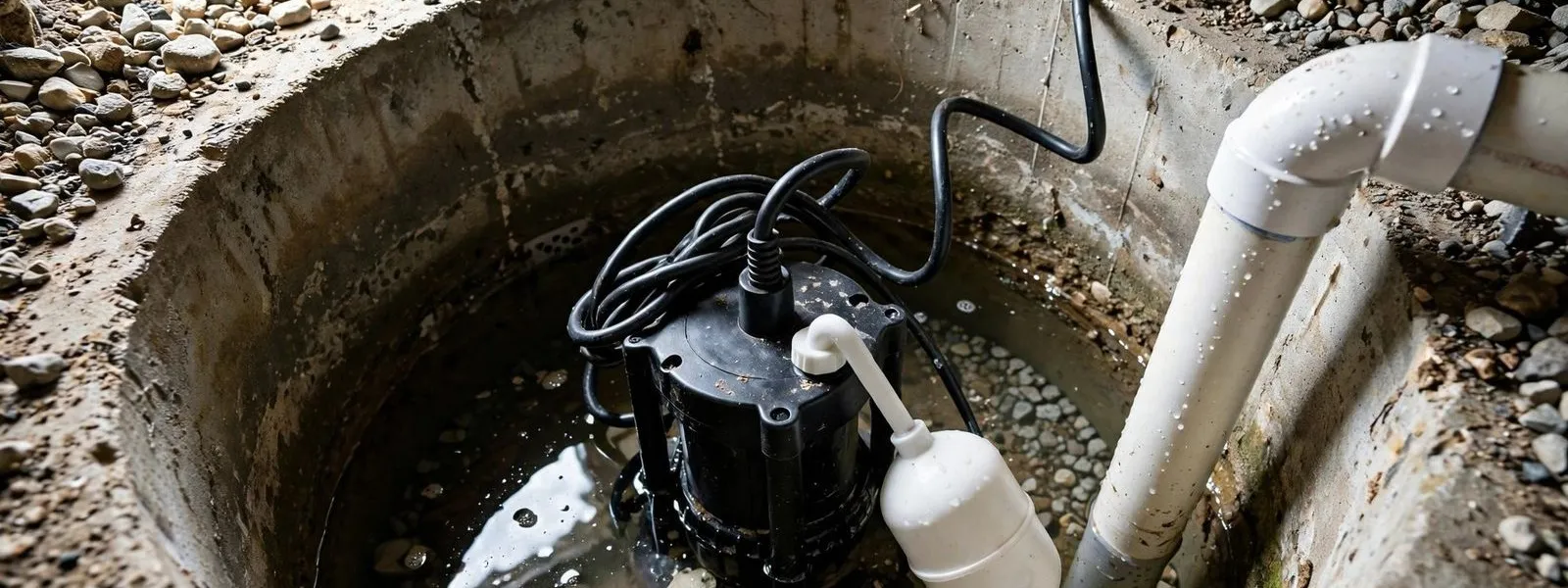
A battery backup sump pump is a second pump, wired to its own battery and charger, that takes over when the main pump loses power or fails. In a Newark, DE basement it matters most during the exact storms that cause flooding, because heavy rain and power outages tend to arrive together.
A main sump pump runs on household current. When the lights go out, it stops, and the pit fills at the moment it is filling fastest. The backup is the only thing left working.
How a battery backup actually works
The standard setup has three pieces: a second pump in the same pit or a nearby one, a deep-cycle battery in a vented box and a charger-controller that keeps the battery topped up. The controller watches the water level with its own float switch. If the water climbs higher than the main pump's switch point, the backup starts.
That last detail is a feature. A backup sits idle until the main pump fails to hold the water, so it also covers a stuck float, a burned-out motor and a tripped breaker. A backup is not only for blackouts.
The backup pump is usually smaller than the main one. It buys time, not full capacity, which is why runtime matters as much as power.
Backup types compared
| Type | How it runs | Best for | Watch out for |
|---|---|---|---|
| Battery pump in the same pit | Deep-cycle battery and charger | Most basements with an existing pit | Battery age and limited runtime |
| Battery pump in a second pit | Separate pit and discharge | Homes with heavy inflow | More digging and cost |
| Water-powered unit | Pressure from the home's water supply | Long outages with no battery to maintain | Water use and a pressure dependency |
| Generator with the main pump | Gas or standby generator | Homes that already need whole-house power | Starting, fuel and transfer switch |
Water-powered units draw on the home's water pressure, so ask the plumber how much water the unit uses and where its discharge goes. The discharge matters here as much as it does for the main pump.
How long a battery lasts in a storm
Runtime depends on how hard the pump works, and that depends on how fast water enters the pit. A battery that runs a pump for many hours at a slow trickle may last far shorter at full inflow. The maker's chart shows hours at a given flow, so ask for it and compare it to what your pit sees in a wet week.
The battery itself ages. Most deep-cycle batteries lose capacity after a few years, and heat in a utility room shortens that further. Follow the manufacturer's replacement schedule, and test the system on a calendar, not when the sky turns dark.
Add an alarm. A high-water alarm or a battery-low alarm gives you notice before the basement does.
What Newark, DE storms ask of a backup
The City's own stormwater page blames much local flooding on storm pipes and inlets that cannot keep up with intense rain. In a storm like that, many streets and yards are wet at once. A backup that was fine in a dry summer can run for hours.
Planning this repair?
Call to book a same-day appointment when one is available. You get a clear price before work starts.
Where the backup discharges
The backup needs a path out of the house too. Newark's code keeps sump water out of the sanitary sewer, so the line must end outdoors or in the storm system where the code permits. The sewer chapter names plumbers as well as owners, so a plumber who suggests tying into a drain is suggesting something prohibited.
Ask the plumber to show where the backup line ends. If it joins the main discharge, a check valve must stop the main pump from pushing water back through the idle backup.
Two pumps feeding one small pipe can also choke the flow when you need it most.
Installation and testing steps
- Check the pitA shared pit needs room for two pumps and two floats without tangling. Some pits are too small.
- Set the switch heightsThe backup float sits above the main pump's float, so the backup starts only after the main pump has failed to keep up.
- Place the battery and chargerKeep them on a shelf or stand above any water, in a spot with air movement and away from heat.
- Wire the alarmConnect a high-water and low-battery alarm you will actually hear.
- Run a full testFill the pit with a hose until each float trips, and confirm each pump moves the water outside.
- Test on a scheduleRepeat the test every few months and before storm season, and replace the battery on the maker's timetable.
A plumber installing the pump handles the plumbing part. The electrical connection must be safe and grounded, so ask who is responsible for it before the work starts. For wider scope, see plumbing installation.
If your basement already floods
A backup keeps a pump running, but it cannot fix a pit that is too small or a lot that sends water toward the house. If water still arrives faster than any pump can move it, the cure is drainage work around the foundation. The exterior options appear under basement waterproofing.
Whatever you do, keep people out of a basement with water near outlets or the panel. Turn off power at the main breaker only if you can reach it without stepping in water. Otherwise call for help, because a plumber or an electrician has the right gear.
Insurance: a backup is not the same as cover
A pump that keeps running prevents a loss, but it does not pay for one. Ask your agent three plain questions: is flood excluded, is sewer or drain backup covered by a rider, and what does a separate flood policy require before it starts. The City of Newark points owners to the National Flood Insurance Program, and says most homeowners' policies leave flood out.
Cover bought after the water arrives will not help, because flood policies carry a waiting period. Settle the paperwork in a dry month.
Choosing a plumber and nearby towns
Delaware requires a license for plumbing work, and the state's online lookup lets you verify a plumber before the visit. For a first look at a failing pump, see sump pump service.
The same storms reach beyond the city, whether you live in Brookside or Bear, and the permit authority follows the tax parcel. A parcel number starting with 18 is a Newark matter. Anything else goes to New Castle County.
Battery backup questions
It depends on the battery, the pump and how fast water enters the pit. At a slow trickle it may run many hours. At full inflow it may last far less. Ask the maker's runtime chart and compare it with your worst day.
A dry history proves little. The power fails in the storms that raise the water table, and a main pump that has never been tested can fail without notice. A backup is most valuable in a basement you have finished or stored things in.
Every few months and before storm season. Unplug the main pump and fill the pit with a hose until the backup float trips, then plug the main pump back in. Check the battery terminals and the alarm at the same time.
Yes, unless a backup or generator takes over. Inside City limits, Newark runs its own electric utility, so ask the City about outages. Outside the City, ask your electric provider. Do not wait on a restore time to protect the basement.
No. The code that closes the sanitary sewer to sump pumps applies to a backup exactly as it does to the main pump. The plumber should show you where the water goes outside.
Need a plumber instead of an answer?
Call (410) 378-7601