Water you cannot see is still water you pay for, and it can soak a floor long before a stain shows. Newark 24/7 Plumbing takes emergency leak detection calls in Newark, DE and nearby towns such as Brookside. While you wait, shut off the home's main valve if water is escaping, avoid rooms where water meets outlets, and move belongings off wet floors.
Most hidden leaks give small signals first: a meter that moves when nothing is running, a warm patch underfoot, a ceiling ring, a hiss behind a wall. This page is organized by what you notice, because the symptom usually points to the part of the house worth checking.
Finding the leak with instruments before cutting anything can often limit the opening to a small access hole. Nobody can name the cause over the phone, so the table further down helps you describe the problem. It is not a diagnosis.
Water leaking now: first steps before the plumber arrives
- Close the main valveIt is usually where the water line enters the house, in a basement, crawlspace, utility room or garage. Turn it clockwise until it stops. If it will not move, stop forcing it and tell the dispatcher.
- Keep electricity out of itIf water is dripping near a light fixture, outlet or the panel, do not touch them. Stay out of that room and mention it on the call.
- Drain the linesOpen one faucet at the lowest level of the house so pressure drops and less water reaches the leak.
- Note what you seeTake photos of stains, write down where you hear water, and jot the meter reading. The plumber can use all three to narrow the search.
If a pipe has split and water is pouring rather than seeping, go to our burst pipe repair guidance for the faster shutdown steps. You should not need the street valve. The City will close it after a repair is booked, so your home's own main is the one to use.
Water meter still running or a high water bill in Newark, DE
Start with a simple test. Close every tap, pause the dishwasher and washer, and make sure nobody flushes. Watch the meter for a few minutes. If the dial or the small leak indicator keeps moving, water is leaving the pipes somewhere.
The City of Newark explains the meter's leak indicator on its water conservation page. According to the City, it notifies customers when it believes there may be a leak on their property, and on request it will do what it can to help identify the source. Contact the City's water department if you received a notice, or if you want a second opinion first.
Smart meters are being rolled out and read water monthly, so changes in use show up monthly. Whether a leak earns a bill adjustment is a question for the City's billing office. A plumber cannot promise it.
Rule out the quiet culprits first. A toilet flapper that seeps can run all day, so drop a little food coloring in the tank and see whether it reaches the bowl without flushing. Ice makers and humidifiers can also be the source.
Slab leak signs: warm floor spots and running-water sounds
A slab leak is a break in a pipe that runs in or beneath a concrete floor. Hot-water lines can be a common culprit because they expand and contract daily. A warm patch on tile or hardwood, or a bare foot that feels heat near the water heater side of the house, is the classic clue.
Other signs include the sound of water running when every fixture is off, a meter that keeps moving, damp carpet along a wall, baseboards lifting, and a musty smell with no visible source. A hot-water bill that climbs with unchanged habits fits too.
Homes differ. Some sit on slabs, others on crawlspaces or basements, so these symptoms do not always mean a slab. Ask the plumber to confirm what kind of foundation the leak is under before anyone talks about breaking concrete.
If the leak is confirmed under a slab, the realistic options are a spot repair through a small opening, rerouting the line through walls or the attic, or repiping the house when pipes are failing repeatedly. Each has trade-offs in disruption and cost.
Ceiling, wall and attic leaks: stains, drips and soft drywall
A yellow-brown ring on a ceiling, paint that bubbles, or drywall that feels soft usually means water has been arriving for a while. Timing is a useful clue. A stain that grows only when the upstairs shower or toilet is used suggests a drain or fixture leak. A stain that grows around the clock points to a pressurised supply line.
Wall leaks are harder to place because water travels down studs and appears far from the break. A hiss inside a wall, a cold spot, or a patch of warm drywall near a hot line can help the plumber focus. Moisture readings across the wall let them map the wet area before cutting.
In attics, plumbing leaks share space with roof leaks, condensation and air conditioner drain lines. A drip that appears only during rain is usually a roofing problem, which is a different trade. A drip on dry days, or one that follows laundry or showers, is worth a plumber's visit.
Wet insulation holds water against the ceiling and hides the real size of the problem. Do not stand under a sagging ceiling.
Leaks under the house: crawlspace and basement clues
Crawlspace leaks are easy to miss because nobody goes down there. Look for dark or sagging insulation, a musty smell at floor registers, floors that feel spongy, wood flooring that cups, and pooled water or soft soil under the house.
Not everything wet down there is a plumbing leak. Newark gets about 47 inches of precipitation a year by the NOAA 1991-2020 normals for the Ag Farm station, so groundwater and downspout runoff can dampen a crawlspace with no pipe failing at all. A useful test is to look after a dry week. If the dampness is still spreading, the cause is probably a pipe.
Corroded joints, pinholes in older copper, failed fittings and cracked drain lines are the common sources. A drain leak shows up only when water is used, while a supply leak keeps going. The plumber can pressure-test the supply side and run water through the drains to tell them apart.
Do not crawl into a space with standing water near wiring. Describe what you see from the access door and let the plumber handle the rest.
Water where it should not be?
Close the nearest shutoff, then call. We answer around the clock.
Underground and buried line leaks between the street and your home
A leak on the buried line that feeds the house often shows outdoors first. Look for a patch of lawn that stays green and soggy in dry weather, a low spot that keeps filling, a wet strip near the foundation or the sound of water near the meter. Indoors, pressure may sag and the meter may run with every fixture closed.
Because the pipe is buried, finding the exact point matters. Digging a long trench on a guess costs more and disturbs more yard than locating the break first. The plumber can use listening equipment and line tracing to mark the spot, then decide between a spot dig and trenchless work.
Who owns which stretch of line is not always obvious. Ask the City's water department where its pipe stops and yours starts before you commit to a repair. Our water service line repair page explains the repair options and the call to make before anyone digs.
Delaware's one-call service for utility marking is Miss Utility of Delmarva, reached through call811.com, and it applies to any digging.
How leak detection methods work
Different leaks respond to different tools. These are the methods you will hear about and what each does.
Acoustic listening. Pressurised water escaping a pipe makes a hiss or vibration. Sensitive microphones on the floor, wall or ground amplify it, and the plumber moves the sensor until the sound peaks. It works best on metal pipe and is harder on plastic, which carries sound poorly.
Tracer gas. The line is emptied and filled with a harmless, non-flammable gas mixture. The gas escapes at the leak and rises through soil or floor, where a detector picks it up. It suits quiet or deeply buried leaks.
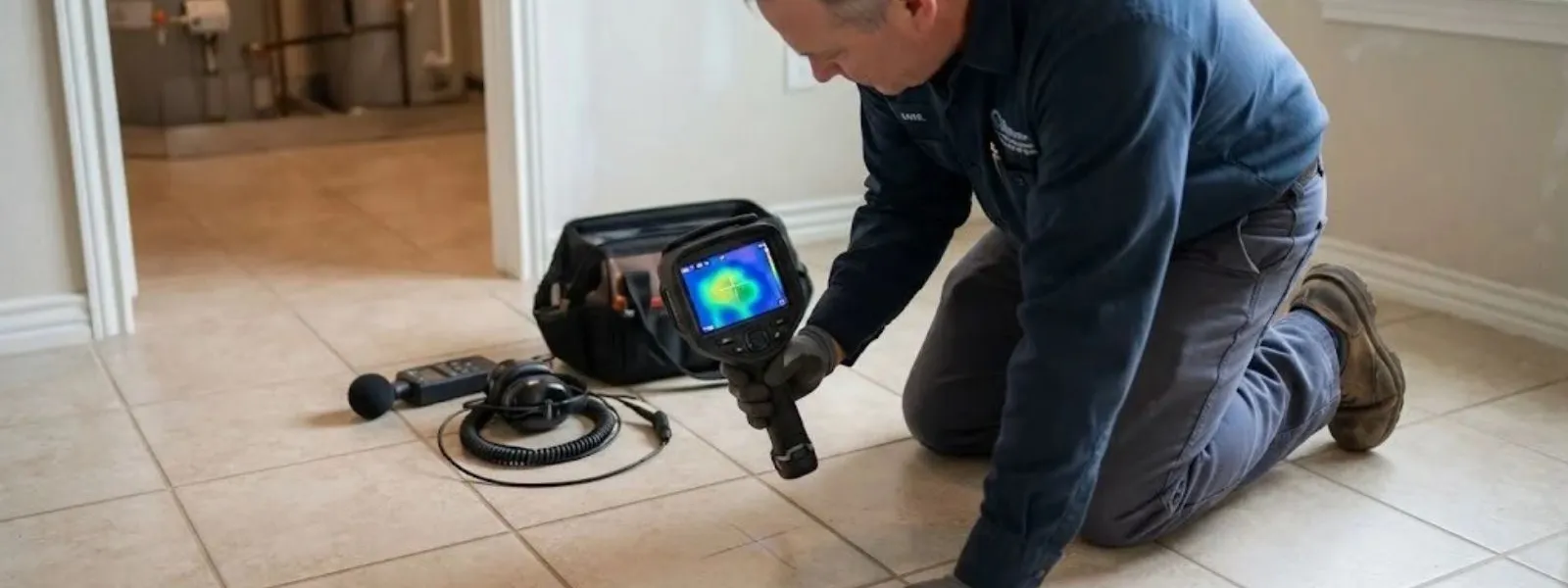
Thermal imaging. An infrared camera shows temperature differences on a surface. Hot-water leaks create warm zones, and evaporating moisture creates cool ones. It sees surface patterns only, so it guides the search rather than ending it.
Pressure testing. The plumber isolates a section of pipe and watches a gauge. A steady reading clears that section, a falling one convicts it.
Camera inspection. A small camera on a flexible cable looks inside drains and accessible cavities to confirm cracks, offsets and root intrusion.
Sprinkler, yard and meter-box leaks
Irrigation leaks rarely announce themselves. A zone that floods, a head that geysers, or a lawn patch that stays swampy usually means a cracked lateral or a failed valve. Backflow assemblies on irrigation must be tested each year under the Delaware plumbing code. Delaware declared a statewide drought watch in June 2026, so check news.delaware.gov for current status and stop wasted irrigation water.
Yard and meter-box leaks sit where the City's meter meets your line. Water pooling in the meter pit or a constantly damp ring around the lid may be on the City side or the owner's side. Do not lift the lid and poke at fittings, because those belong to someone specific. Report it to the City, and ask a plumber to check your side at the same time.
Which symptom points to which source
| What you notice | Likely source | First thing to check |
|---|---|---|
| Meter moves with every tap off | Toilet, buried line or hidden pipe | Toilet dye test, then walk the yard for wet spots |
| Warm patch on the floor | Hot-water line in a slab | Hot-water bill history and the water heater side of the house |
| Ceiling stain that grows over days | Supply line or upstairs drain | Whether it grows when the upstairs fixtures run |
| Hiss in a wall | Pressurised pipe inside the wall | Close the main and see if the sound stops |
| Musty smell, spongy floor | Crawlspace or basement pipe | Look from the access door for pooled water |
| Soggy lawn in dry weather | Buried service line or irrigation | Meter test, then check sprinkler zones |
Leak detection for shops and offices
The same methods apply in commercial buildings, though size, shutdown rules and tenant access change the planning. See commercial plumbing for how those calls are handled.
What drives the cost of finding and fixing a leak
Insurance often responds to sudden and accidental water damage but not to wear, slow seepage or flood, so read your own policy and ask whether the search itself is covered. Tell us what you found when you call and the price quoted before work starts will reflect your actual leak.
Hidden leak FAQ
Yes. A dispatcher picks up around the clock, 24/7, and an active leak, a spreading stain or a meter spinning hard gets a licensed plumber sent out after dark or on a Sunday. A slow leak that can wait may be booked for a same-day visit when available.
Close the main valve inside the house and watch the meter. If the dial stops, the leak is downstream of that valve. If it keeps moving, the loss is between the valve and the meter or in the supply beyond. The City can tell you where its responsibility ends.
Not always. Acoustic, thermal and moisture tools often narrow a leak to a small area, so the opening can be limited to where the pipe actually is. Some repairs still need an opening, and the plumber should explain it first.
No. Houseguests, a filling pool, extra laundry and irrigation can all raise use. A bill that climbs while the household routine stays the same, or a meter that moves with everything off, points toward a leak.
Delaware law reserves paid plumbing work for licensed master plumbers. A homeowner exemption exists, but it has limits and still needs a permit application. Any plumber can be checked at the state license lookup.
It depends on the policy. Many cover sudden and accidental damage but exclude wear and slow leaks, and some cover the cost of tearing out to reach a leak while others do not. Read your policy or ask your agent before the work begins.
Need a plumber instead of an answer?
Call (410) 378-7601