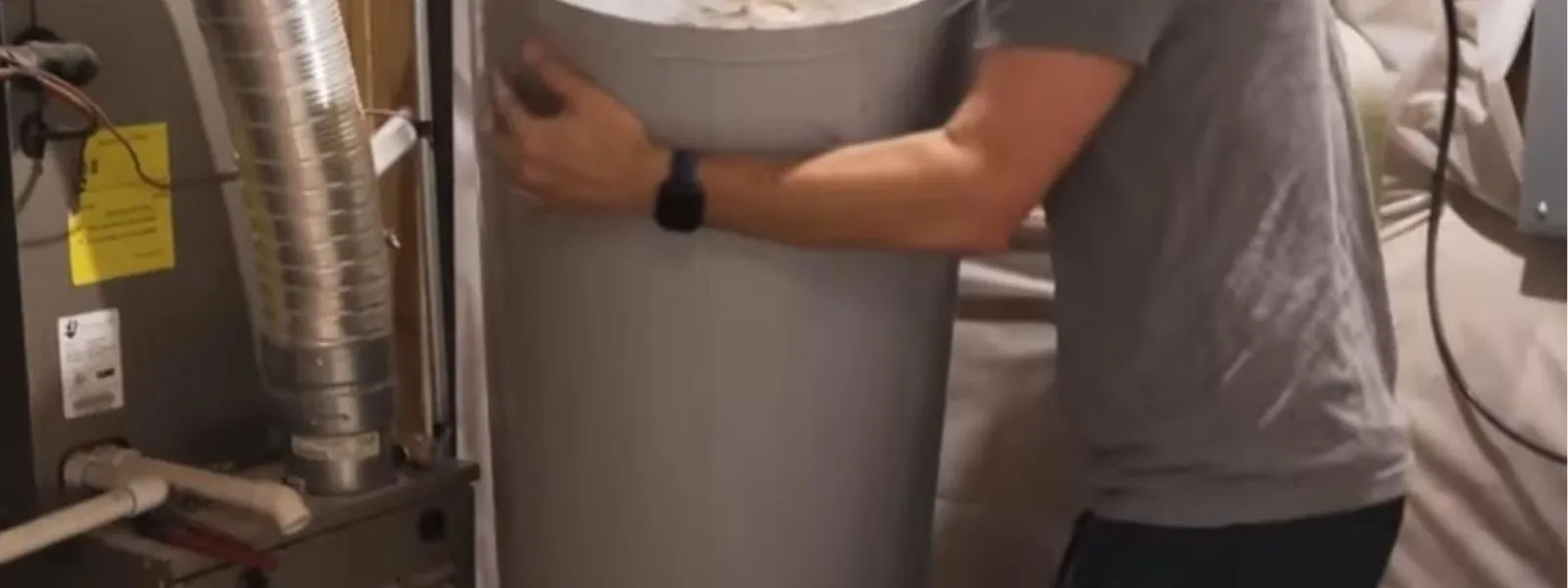
A water heater that is leaking onto the floor or has stopped making hot water is an emergency in a Newark, DE home, and our line is open 24/7 to send a licensed plumber. While you wait, switch off the breaker or turn the gas control to off, close the cold-water valve above the tank, and keep children and pets away from standing water.
This page covers the replacement decision, from the signs of a dying tank to rebates, permits and price. If a valve or fitting might be the whole problem, the repair side of water heaters is the better place to start.
Same-day appointments are offered when available, including after hours. A plumber has to see the tank before recommending a swap. A planned job follows a different path, laid out on the water heater installation page.
A leaking tank: replace it now or repair it?
Water at the base of a heater has two kinds of source. A loose fitting, a weeping drain valve or a dripping relief valve is a repair. Water seeping out of the tank body itself, usually where rust has eaten through the steel shell, cannot be patched, and the tank has to come out.
You can narrow it down before anyone arrives. Dry the top of the tank, the pipe connections and the valves with a towel, then watch where the first drop forms. A drip that starts at a connection above the tank is probably a fitting. Water from under the jacket, or rusty streaks low on the tank wall, points to internal failure.
Age settles many of these calls. The US Department of Energy puts storage tank life at roughly 10 to 15 years, so a leaking tank in that range rarely justifies a repair bill. A leaker only a few years old deserves a closer look, because the culprit may be a valve.
A slow seep can turn into a full release of the tank's contents once rusted steel gives way, so do not wait out a weekend with a wet tank.
Right now: stop a leaking tank from doing damage
- Cut the power or fuelFor an electric tank, turn off its breaker at the panel. For a gas tank, turn the control knob to the off or pilot position. Never wade through water to reach a switch.
- Close the cold supplyTurn the valve on the cold pipe above the tank clockwise. If it will not turn, do not force it. The City of Newark will close the water at the curb once a repair is scheduled, and its Water and Wastewater Department answers after hours as well.
- Contain the waterLay towels, run a wet vacuum or set a bucket under the leak, and move stored items off the floor.
- Leave the tank full of hot water aloneDraining a hot tank to a floor drain or hose risks scalds. Let the plumber decide whether to drain it and when.
If you smell gas near the heater, do not touch switches or look for the source. Leave the building, call your gas utility from outside, call 911 if you are unsure or anyone feels unwell, and only then call a plumber. Gas piping work needs a licensed professional in Delaware.
No hot water: the tank or something smaller?
Not every cold shower means a new tank. An electric unit can lose heat from a tripped breaker, a failed heating element or a bad thermostat. A gas unit can lose it from a pilot that went out or a burner that will not light. Lukewarm water that runs out fast often points to sediment in the bottom of the tank or a broken dip tube.
Checking the breaker is safe. Opening the access panels on an electric heater is not, because the wiring behind them is live. If the unit is old, makes rumbling or popping noises, or sends out rusty water, the odds tilt toward replacement even when the symptom looks minor.
Tank, tankless or heat pump: what each replacement changes
| Type | Fits best when | What can complicate it |
|---|---|---|
| Standard tank, gas or electric | You want the fastest like-for-like swap in the same spot | Old flue or chimney that no longer suits a modern unit, missing drain pan or expansion tank |
| Tankless gas | The household uses hot water in long stretches and you want no standby tank | Larger gas line, new venting, wall space, hard-water scale |
| Tankless electric | Gas is not available and loads are small to moderate | High electrical demand, possible panel or wiring upgrade |
| Heat pump (hybrid) tank | Electric tank is being replaced and the room is large and mild | Needs open air space, a condensate drain and a dedicated circuit |
A standard tank is the simplest swap because the connections are already in place, which matters when a plumber is restoring hot water the same day. Many gas heaters in older homes vent into a chimney, and a modern unit may need that flue relined or rerouted through a side wall, which adds work.
Tankless units cost more up front and, according to the Department of Energy, last about 20 years. They also change the house: gas lines often need to be larger and vents are different. Our tankless water heater page covers sizing, descaling and the cases where the savings never arrive.
Heat pump models pull heat from the surrounding air, and the Department of Energy advises at least 1,000 cubic feet of air space around the unit and a location that stays between 40 and 90 degrees Fahrenheit year-round. A cramped, cold utility closet is a poor fit, while a roomy basement is a good one.
Water where it should not be?
Close the nearest shutoff, then call. We answer around the clock.
Swapping a gas heater for a heat pump unit
More owners now ask about replacing a gas water heater with a heat pump model of the same tank size. It can be done, but it is a small remodel rather than a straight swap. Most heat pump models need a dedicated electric circuit, so the panel must have room for it. The unit also needs a drain for condensate and enough open space to breathe.
The gas side matters too. The old gas line has to be capped or removed by a licensed professional, because gas piping falls outside Delaware's homeowner exemption. The old flue also needs a plan, since an unused vent can leave a leftover opening. If your electric bill comes from the City of Newark Electric Department, ask about service capacity before choosing a model that adds load.
If the tank failed tonight, a like-for-like tank is the quickest road back to hot water. A heat pump conversion takes more planning. Some owners restore hot water first and convert later, which means paying for two installs.
Delaware rebates and the federal credit
Energize Delaware, the state's sustainable energy program, lists rebates for heat pump water heaters and for efficient gas or propane tankless units through its Home Performance with ENERGY STAR path. Amounts, caps and eligibility change from year to year, so read the current numbers on the Energize Delaware program page instead of trusting any figure you hear secondhand.
The process matters more than the number. The program requires an energy assessment before work begins, and a participating contractor must reserve the rebate before the job starts. A rebate therefore fits a planned swap better than a same-night emergency replacement. Ask any plumber whether they take part in the program before you agree to a particular unit.
The federal credit for heat pump water heaters has ended. The IRS states that the 25C credit is not allowed for property placed in service after December 31, 2025, so do not budget for it on a 2026 install.
Permits, inspections and licensed work in Newark, DE
Newark's Building Permits page lists water heaters in its permit-related work list, and it says City inspectors review plans, issue permits and conduct inspections. Which office handles your address depends on the parcel. A New Castle County parcel number that begins with 18 means the City of Newark. Anything else goes to New Castle County Land Use, which has a self-certification form for replacement water heaters. That generally includes addresses in Brookside, Glasgow and Bear, which are unincorporated.
Code editions are not uniform. The City's page lists the 2018 International Plumbing Code, while the state plumbing regulation adopts the 2021 edition with Delaware amendments. The Code Enforcement Division at 220 South Main Street can tell you which rules and permit steps apply to a swap at your address.
Delaware law says plumbing services must be done by a licensed master plumber under Title 24, Chapter 18 of the Delaware Code. A homeowner may work on their own home only if it is not for sale or rent and a permit application is filed. Gas piping is excluded. You can verify any plumber's license online through the state's plumbing licensing board.
The State Division of Public Health's homeowner sheet names details a plumber should handle. The first 12 inches of water connections must be metal or an approved flex connector, storage tanks need an approved drain pan, and expansion tanks are expected on public water systems.
About half of Newark homes are renter-occupied according to Census figures. If you rent, tell your landlord about the leak right away and in writing, photograph the damage, and let the owner approve the replacement.
What changes the price of a replacement
Policies differ. Many address a sudden failure but not rust, age or a seep that ran for weeks, so read your own policy and photograph the area before cleanup. Call us for a clear price before work starts on your actual tank.
Questions about water heater replacement in Newark, DE
A failed tank does not wait for business hours, and neither does our line, which runs 24/7. We send a licensed plumber and offer same-day appointments when available. While you wait, shut off the power or gas, close the cold valve and contain the water.
Dry everything and watch where the water returns. A drip at a pipe connection or valve is often fixable. Water coming from the tank body, rust at the bottom seam or a wet jacket usually means the shell has failed.
Only in narrow cases. Under Title 24 of the Delaware Code, a homeowner may do plumbing in their own home if it is not for sale or rent and a permit application has been filed. Gas piping is excluded, so a gas heater connection needs a licensed professional.
Energize Delaware has offered rebates, but amounts and eligibility change, and the program requires an assessment and a contractor reservation before work starts. Check the program page for current terms. The federal 25C credit ended for property placed in service after December 31, 2025.
Newark lists water heaters among permit work, but the page is not explicit about like-for-like swaps. If your parcel number starts with 18, call Code Enforcement. Other addresses go to New Castle County Land Use, which has a self-certification form for replacement heaters.
It depends on your electric panel, your space and your fuel costs. A planned conversion is easier to do well than an emergency one, and the old gas line must be capped by a licensed professional.
Need a plumber instead of an answer?
Call (410) 378-7601