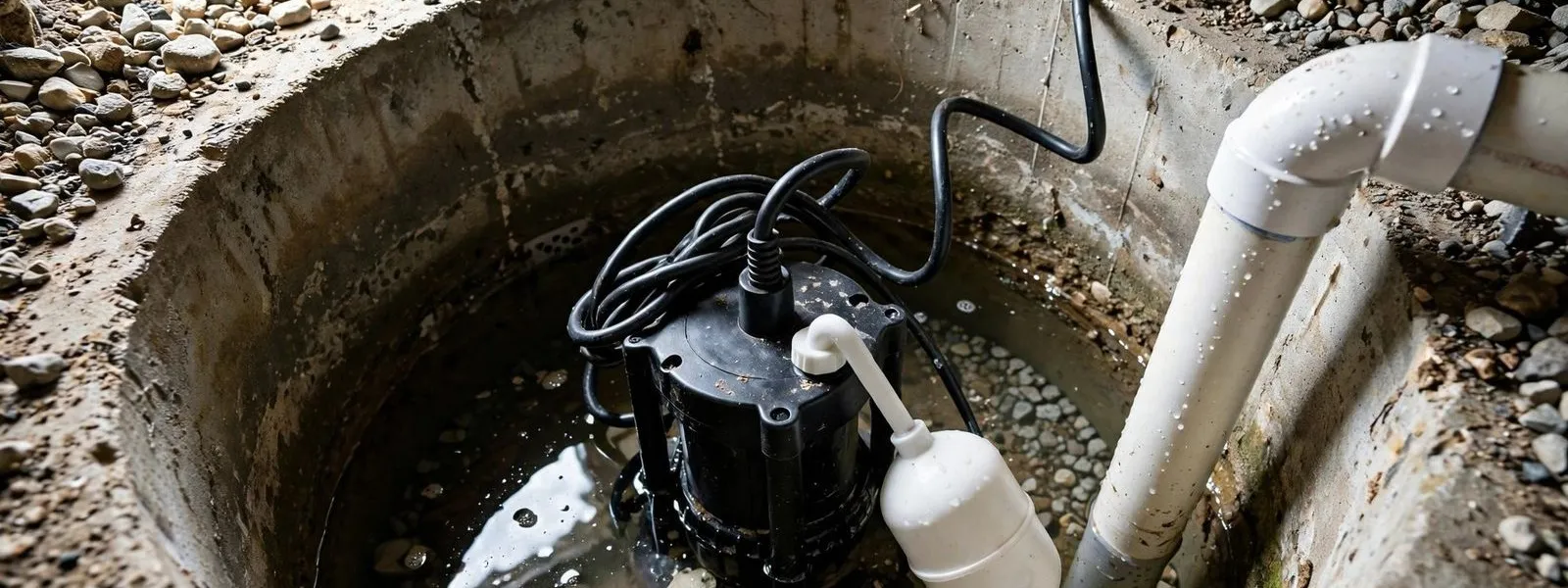
A sump pump that stops during a downpour leaves a basement with only a few minutes before water spreads across the floor. Emergency sump pump repair in Newark, DE is available 24/7, and a licensed plumber can come out after you call. While you wait, move boxes and electronics up off the floor, and do not step into standing water if it is near outlets or the electrical panel.
Water in a pit that is not being pumped out will usually trace to one of a few causes: power loss, a stuck float, a clogged intake or a failed check valve. This page explains how to spot each and what a lasting fix looks like.
Pump quit or pit overflowing right now: first moves
Check the simple things before assuming the pump is dead. A tripped breaker or a GFCI outlet that popped during a storm is the most common reason a pump stops.
- Look at the outlet and breaker. Reset a tripped GFCI only if the area around it is dry.
- Lift the float gently with a dry stick to see whether the pump starts, only if you can reach the pit without stepping in water.
- Listen for a hum without pumping, which suggests a jammed impeller or failed motor.
- Check that the discharge pipe outside is not frozen, kinked or buried.
- If water is near outlets, keep that circuit's breaker off only if you can reach the panel without standing in water, and stay out of the water.
Do not reach into the pit while the pump is plugged in. A pump that cycles on and off every few seconds is not healthy either, and usually points to a check valve that has stopped holding water in the discharge line.
Types of pumps and when each fits
| Pump type | How it sits | Best for |
|---|---|---|
| Submersible | Inside the sump pit under the water line | Most basements, quieter and handles more flow |
| Pedestal | Motor above the pit on a stand | Shallow pits and easy access to the motor |
| Battery backup | Second pump on a separate battery | Storms that also knock power out |
| Sewage ejector | Sealed basin for waste from basement fixtures | Basement bathrooms, not groundwater |
A sewage ejector is a different system from a sump pump. It lifts waste from a basement toilet or laundry sink and must not be mixed with groundwater. If you are not sure which pit you have, a plumber can tell by looking at the lid and the pipes connected to it.
Parts that fail
Float switches stick or tangle on the pipe. A stuck float is behind many failures, because the pump never gets the signal to run. The check valve on the discharge line stops water from falling back into the pit, and when it fails the pump short cycles.
Impellers jam with silt or small stones, and the motor then overheats. Pumps also wear from repeated cycling, so a unit that has run through several wet seasons may be worth replacing instead of patching. A pit with no gravel base or a cracked basin lets silt in, so the new pump fails faster than the old one did.
Where the discharge may and may not go
Newark's code expressly bars connecting sump pumps to the sanitary sewer. The ban covers roof drains, subsoil drains and French drains too, and it applies to owners, tenants, contractors and plumbers. Water that enters the sanitary sewer from a basement adds load to the system that is not designed for it.
Discharge should go outside, away from the foundation, onto ground that slopes away or into a stormwater route that is allowed. Where the pit sits below the storm sewer level, the code expects an automatic lift through a sump into the storm system.
Unincorporated areas such as Brookside follow county rules instead, and county code allows only one cellar drain to connect to a sanitary sewer. Parcel numbers starting with 18 belong to the City, so confirm which office applies before you choose a route.
A discharge line that empties right next to the wall will cycle the same water back through the soil into the pit. Extending it well away and keeping it clear of the neighbor's property solves that.
Water where it should not be?
Close the nearest shutoff, then call. We answer around the clock.
Why Newark basements see this
White Clay Creek runs through Newark, and the National Weather Service recorded it cresting at 15.77 feet, moderate flooding, after the remnants of Ida in September 2021. USGS also recorded a record flow near Newark in Hurricane Floyd in September 1999. Those are creek events, and not every basement near the creek floods, but they show how fast the creek can rise after heavy rain.
For your basement, the practical point is that a pump with no backup is exposed during exactly the storms that matter. Newark averages about 46.96 inches of precipitation a year by NOAA normals, so pumps earn their keep each season. If you are unsure whether your property sits in a mapped floodplain, the City's Planning and Development Department can answer that question.
Replace, repair or add a second pump
Repair suits a pump that is only a few years old and has a stuck float or bad check valve. Replace a unit that is noisy, rusted, short cycling or older than the problems it has been causing. A basement that has flooded before deserves a second pump or a battery system, because one pump has nothing to fall back on.
Installation includes digging or reusing a pit, setting the pump on a firm base, adding a check valve, running the discharge outside and sealing the lid. A sealed lid also matters for radon, and the details on that are on the basement waterproofing page. Backup power options such as a battery system or a water-powered unit depend on the home's plumbing, so a plumber should look before you buy.
Insurance and flood
The Delaware Department of Insurance says standard homeowners policies do not cover floods, and flood coverage takes 30 days to start. Water that rises from the ground is typically treated differently from a pipe that bursts inside the house. Ask your agent whether you have any water backup rider before the next storm, not after.
For hidden water inside walls that is not from the ground, see leak detection.
What drives the cost of sump pump work
Coverage depends on your own policy, and standard homeowners policies exclude flood, so read yours before you need it. Call for your own number, quoted plainly before any work begins.
Sump pump questions
Yes. Storms do not keep business hours, and dispatch runs 24/7, so a pit filling overnight or on a weekend gets a call answered. Same-day appointments are offered when available.
No. Newark's code bars sump pumps and subsoil drains from the sanitary sewer. Discharge goes outside, away from the foundation, or to a route the City allows.
A float stuck on, a failed check valve, a high water table after heavy rain or a pump too small for the inflow are the usual causes. A plumber can tell which by watching a full cycle.
Pour a few gallons of water slowly into the pit until the float lifts. The pump should start, empty the pit and shut off without short cycling. Test it before wet seasons.
Standard homeowners policies do not cover flood, per the Delaware Department of Insurance. Flood insurance is separate, and a policy takes 30 days to begin.
Rules vary. A new connection or relocated pipe can need a plumbing permit, so check with the permit office that covers your parcel. A homeowner may do some plumbing under Delaware law with a permit application filed.
Need a plumber instead of an answer?
Call (410) 378-7601