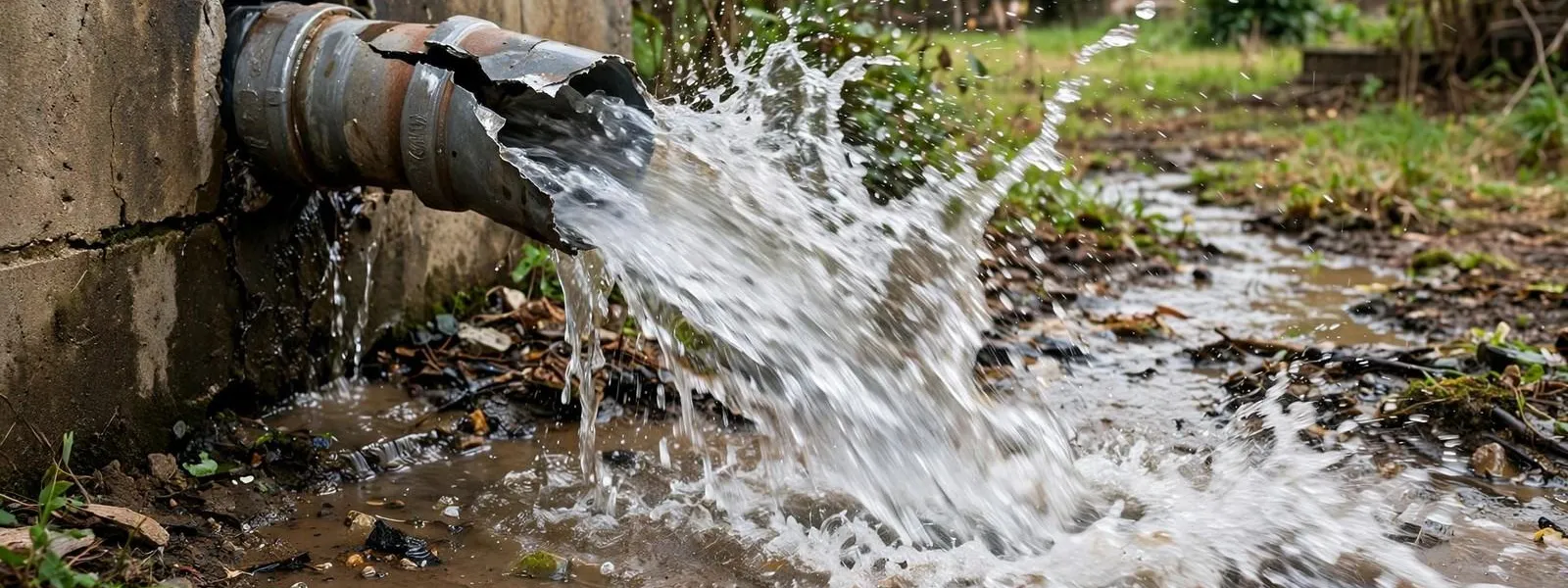
A burst pipe can release a great deal of water in an hour, so the first few minutes matter most. Burst pipe repair in Newark, DE is dispatched 24/7 by Newark 24/7 Plumbing, and a licensed plumber is sent to stop the damage at the source. Until the plumber gets there, close the main valve inside, switch off the water heater, and keep away from wet outlets and the panel.
The call goes faster if you can say where the water is, what the pipe is made of and whether it froze. Below you will find shutdown steps, how each pipe material fails, and when a patch is enough.
Pipe burst right now: how to stop the water safely
- Close the main shutoff inside the homeIt sits where the water line enters the house, often in a basement, crawlspace, garage or utility room. Turn it clockwise until it stops. Do not force a stuck valve with a wrench.
- Shut off the water heaterSwitch an electric unit off at its breaker. Set a gas unit to its off or pilot position. An electric element left on without water can burn out.
- Open the lowest tapThis drains the pipes and takes pressure off the break.
- Contain the waterMove rugs, electronics and stored boxes. Use towels, buckets or a wet vacuum if it is safe to do so.
The City of Newark will close the water at the curb once a repair has been booked. You do not need to hunt for the street valve, because your own main does the job. If it will not close, say so on the call, because that changes how the plumber prepares.
Electrical safety when pipes burst
Water and electricity are the real danger in a flooded room. Do not stand in standing water to reach a switch or the panel. If water is dripping onto the panel, a light fixture or a ceiling with recessed lights, stay out of that part of the house.
If the floor is dry and the path to the panel is dry, you may switch off the breaker for the affected room. If anything is wet, leave the breakers alone. Call 911 from outside if water is rising around the panel, if you smell burning or hear buzzing, or if anyone feels a tingle from a wet appliance.
When to call a plumber right away
- Water keeps flowing after the main is closed, which points to a second source or a failed valve.
- A ceiling is bulging or sagging below the break. Stay out from under it, because trapped water can bring the plaster down.
- Hot water or steam is escaping near the heater. Keep clear until the unit is off and cool, since scalding is a real risk.
- You smell gas in or near the wet area. Leave the house, then phone the gas utility and 911 from outside.
Frozen pipe repair in Newark winters
At the University of Delaware's Newark farm weather station, the 1991-2020 January normal low is 25.1 F, and about 97 nights a year dip to freezing or below. That is plenty of time for pipes in exterior walls, garages, crawlspaces and unheated utility rooms to freeze. Water expands as it turns to ice, and the split usually shows up when the ice thaws.
If a pipe is frozen but not yet burst, open the nearest tap slightly and warm the pipe gently with a hair dryer or heating pad. Never use an open flame or a torch. If you see a bulge, frost on the pipe or water has stopped at one tap, shut off the main first, because a thaw can start a gush.
Newark's code assigns the City responsibility for a frozen water service from the main to the curb box shut-off valve, and the owner for the run beyond it. If the freeze is in the line coming into the house, ask the City first. Our boiler repair page covers heating pipes that freeze or lose pressure in a cold snap.
Water where it should not be?
Close the nearest shutoff, then call. We answer around the clock.
Cracked or broken pipe repair: what a plumber actually does
A crack may start as a hairline weep and grow into a spray under pressure. Plumbers repair it by cutting out the damaged section and replacing it, joining new pipe with fittings suited to the material, or by clamping a temporary sleeve while a proper fix is arranged. The choice depends on pipe type, damage size and access.
Some breaks need work right away and others can be stabilized and scheduled for daylight. The plumber will say which category yours falls in. A stable ceiling stain is not the same as a pipe spraying inside a wall.
Repair and permit rules also matter. Newark's code treats stopping a leak in drain, water, soil, waste or vent pipe as exempt from a permit. Replacing a concealed pipe with new material counts as new work that needs a permit and inspection, and that applies to parcels inside the city's permit area. Parcels outside it fall under New Castle County, and a home in Glasgow or a similar nearby town usually does, so ask which office applies.
Delaware's plumbing regulation, 16 DE Admin Code 4455, takes its base from the IPC (2021 edition), while Newark's permit page lists 2018. Ask Code Enforcement or County Land Use which edition governs your pipe replacement before the repair is scoped.
How each pipe material fails and what repair looks like
| Pipe material | How it fails | Typical repair |
|---|---|---|
| Copper | Pinholes from corrosion, split from freezing, loose or leaking soldered joints | Cut out the bad section and sweat in new pipe, or use a coupling |
| PEX | Fitting failures, damage from freezing or sunlight, punctures | Replace the damaged run or fitting with the right crimp or expansion connection |
| Galvanized steel | Rust from the inside, leaks at threaded joints, thin walls | Replace sections, and consider repiping if corrosion is widespread |
| CPVC | Brittle cracks at fittings, heat damage, age | Cut out and replace the section and the nearby fittings |
Copper, drain and pipe leak repair in short
Copper pipe repair. Copper is durable but not immune. Acidic or aggressive water can eat pinholes into it over decades, and a freeze can split a straight run. One failure in sound pipe is a spot repair. Several in one house is a warning sign.
Drain pipe repair. A cracked drain or waste line leaks only when water runs, often showing as a stain below a bathroom or a damp spot by a wall. Repair usually means opening access and replacing the damaged length of pipe or fittings.
Pipe leak repair. Not every leak is a burst. A slow drip at a joint, a weeping valve or a compression fitting can be fixed fast, but keep a bucket under it and do not let it run for days.
If you cannot tell where a leak is coming from, leak detection is the way to find it before anyone opens a wall.
Repair or replace: when a patch is not enough
Patching makes sense when the pipe is otherwise sound and the failure has an obvious cause, like a freeze or a bad fitting. Replacement starts to make sense when the same pipe has failed more than once, when corrosion is visible along the run, or when the material is known to be a problem.
The trade-off is disruption versus repeat visits. A repair is faster and cheaper today. Replacing a whole section or water service line can end a pattern of failures but takes longer and opens more of the house. The plumber should explain both options before any work starts.
What drives the cost of burst pipe repair
Homeowners insurance usually responds to a pipe that suddenly bursts, but rarely to wear, gradual leaks or flood. Check your own policy and take photos of the wet areas first. Call for your real number, and the price will be clear before work starts.
Burst pipe repair FAQ
Yes. The line is staffed 24/7, so a pipe that splits at 2 a.m. on a Saturday gets the same dispatch as one that fails on a weekday afternoon. Lesser leaks that can be contained until morning may be booked for same-day service when available.
Start with the main valve inside your home. The City will close the curb valve once your repair is on the books, so skip the search.
Many policies pay for a sudden burst but not for long-term leaks or a worn-out pipe. Frozen-pipe and water-removal terms differ, so read yours or ask your agent.
You can try a hair dryer on a pipe that is frozen but intact, with a tap open. Never use a flame. If the pipe has bulged, cracked or is leaking, shut off the main and call a licensed plumber.
Paid plumbing work in Delaware goes to a licensed master plumber. A narrow homeowner exemption exists and still involves a permit application. Check any plumber on the state license lookup.
A burst pipe discharges a lot of water fast, often with sound and visible spray, and pressure drops at taps. A leak is slower and may show only as a stain or a rising meter. Both deserve attention, and the main valve is the safe response to either.
Need a plumber instead of an answer?
Call (410) 378-7601