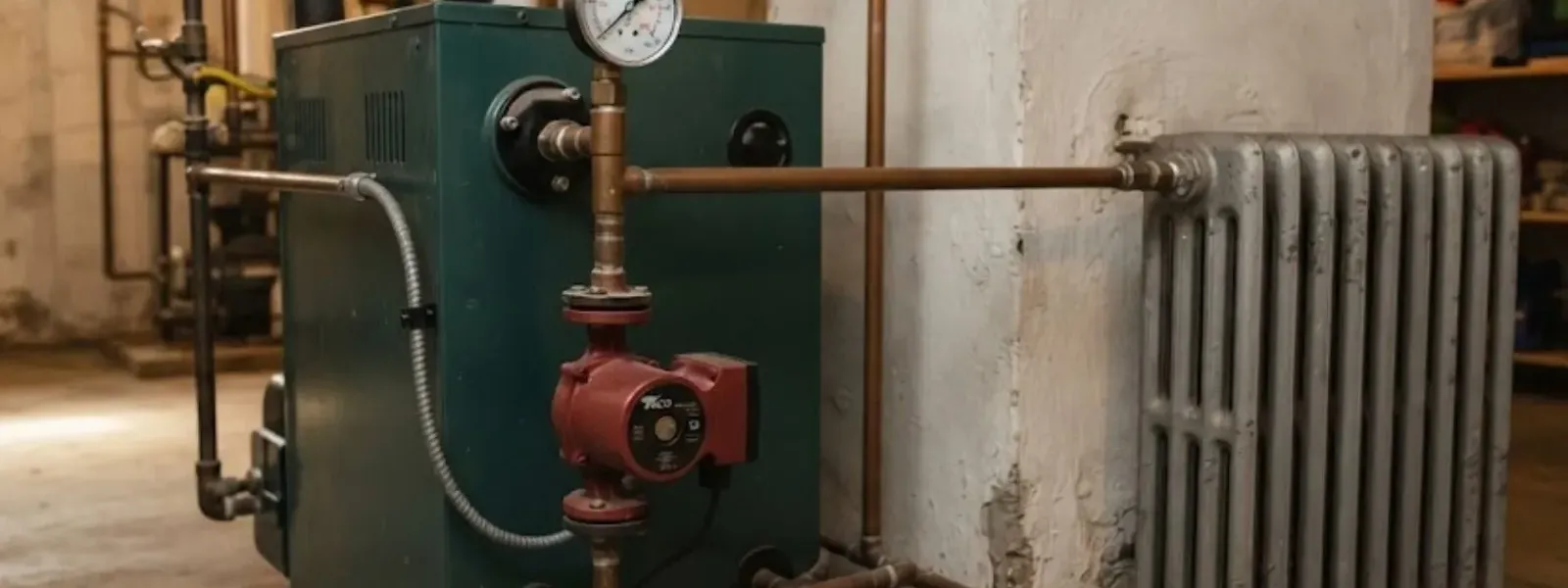
A boiler that quits on a freezing night in Newark, DE puts both the household and the pipes in the walls at risk, so our 24/7 line sends a licensed professional. Until help arrives, keep the family in one warm room, leave faucets on a slow drip on exterior walls, and do not run a gas oven or a camp stove to heat the house.
A gas smell changes the order of everything. Get everyone outside, call your gas utility's emergency number, or 911 if you cannot reach it, from the sidewalk or a neighbor's house, and wait for the all-clear before calling a plumber. Gas valves and piping are licensed work in Delaware.
Calls that arrive overnight, on a weekend or on a holiday get the same answer, with same-day visits booked when openings exist.
How cold Newark gets, and why it matters
The 1991-2020 climate normals for the University of Delaware's Newark Ag Farm station put the January average minimum at 25.1 degrees Fahrenheit. Individual nights fall well below that average, and a house without heat cools fast. Pipes in exterior walls, garages and crawl spaces freeze first.
The same station records about 47 inches of precipitation a year. In a basement that takes on water, controls and burners near the floor do not survive submersion, so never run a boiler that has stood in floodwater until a licensed professional inspects it.
No heat right now: what you can check safely
- Confirm the thermostat is set to heat, set above room temperature, and has fresh batteries if it uses them.
- Check that the boiler's power switch and the breaker are on, and that any red emergency switch near the stairs has not been flipped off.
- Read the display or note any blinking light pattern, and photograph it for the plumber.
- Look at the pressure gauge. A reading near zero means the system has lost water, and a very high reading means the expansion tank or relief valve has a problem.
- For an oil boiler, check the tank gauge. For gas, check that other gas appliances work, which tells you the supply is on.
- Try the reset button once, according to the label. On an oil boiler, press it once only, then call. Repeated resets can flood a burner chamber or hide a real fault.
Stop there. Opening the burner compartment, touching the gas valve or removing the vent invites fire, gas leaks and carbon monoxide.
Hydronic basics: the parts that fail
A hydronic boiler heats water, a pump moves it through pipes, and radiators, baseboard or in-floor tubing release the heat. Not every house has one, so confirm what you have before calling. These are the parts that usually matter.
Low water pressure
A system that has lost water shuts down on a low-water cutoff or runs poorly. The cause can be a leak, a stuck relief valve or a failing auto-fill valve. Topping off without finding the leak only delays the problem.
Trapped air
Gurgling or a radiator that is cold on top points to air. Bleeding a radiator with a key is a common homeowner task, but do not open the boiler's relief valve, which is a safety device.
Circulator pump
If the boiler fires but the radiators stay cold, the pump may have failed or seized. A pump that is hot to the touch with no flow is a classic sign.
Expansion tank
A waterlogged tank cannot absorb heat expansion, so the relief valve may drip and the pressure swings high.
Flue and venting
A blocked or corroded flue can trip safety switches and push exhaust gases into the house.
Water where it should not be?
Close the nearest shutoff, then call. We answer around the clock.
When to call, and who may do the work
| Situation | What it often means | Who handles it |
|---|---|---|
| Cold radiators, boiler is running | Air, pump or zone valve trouble | Licensed plumber or heating technician |
| Pressure at zero or relief valve dripping | Leak, auto-fill or expansion tank fault | Licensed plumber |
| Boiler locks out or will not light | Ignition, sensor, fuel or vent problem | Licensed professional, gas work included |
| Gas odor or carbon monoxide alarm | Leak or combustion problem | Leave, call from outside, then professionals |
Delaware treats hydronic heating and gas piping as licensed work under Title 24, Chapter 18. The homeowner exemption does not cover gas piping, and a master plumber license alone may not cover heating work, so ask the contractor which license applies. You can verify any license online before work begins.
Newark's Building Permits page lists boilers among the equipment that involves permits when systems are replaced or altered. Ask the Code Enforcement Division whether a given repair needs one, and note that an address outside City limits, such as Brookside, falls under New Castle County instead.
Carbon monoxide and yearly service
The State Fire Marshal's winter guidance recommends a professional cleaning and inspection of chimneys and vents every year. It also advises carbon monoxide alarms outside each sleeping area and on every level, tested monthly.
Delaware's carbon monoxide statute, as we read it, covers lodging and rental establishments, so do not assume a law decides this for you. The Fire Marshal's advice still suits any home with a fuel-burning boiler or water heater. If an alarm sounds, get everyone outside and call 911.
If your hot water also stopped, the boiler may feed it through a separate tank, or you may have a standalone unit. The water heater repair page covers the second case.
Freeze protection while the boiler is down
If repair will take time, open the cabinet doors under sinks on exterior walls and let a thin stream run. Know where your main shutoff is. If a pipe does burst, the steps for a burst pipe start with that valve.
What affects the price of boiler repair
Coverage depends on your own policy, so check it. Call with the make, fuel and symptoms to get a clear price before work starts.
Boiler emergency questions in Newark, DE
The line is staffed 24/7, holidays included, and a licensed professional is dispatched for no-heat failures. We do not promise an arrival time, so keep the family in one warm room and protect the pipes.
Yes, a radiator bleed key is a common homeowner task. Bleed only the radiators, never the boiler's relief valve, and recheck the pressure afterward. If the pressure drops to zero, you have a leak and need a professional.
Adding water with the auto-fill or a manual valve may restore pressure briefly, but it does not explain where the water went. Repeated low pressure needs a leak check. Fill according to the manual and call if it keeps dropping.
Walk out at once and call from outdoors. Leave the gas valve alone. Under state law, gas piping sits outside what an owner may do, so licensed professionals handle it.
The state's statute covers lodging and rental establishments. It does not appear to be a rule for owner-occupied homes. The State Fire Marshal still recommends alarms outside sleeping areas and on every level.
Need a plumber instead of an answer?
Call (410) 378-7601