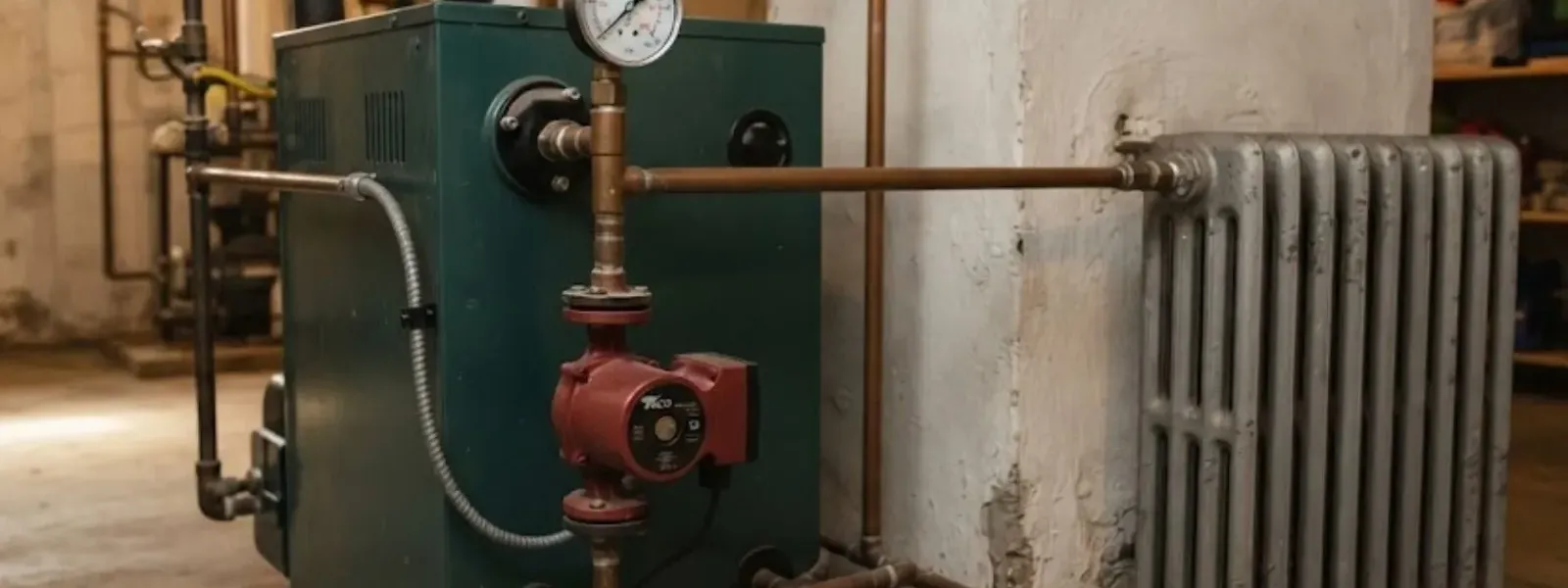
If you smell gas near your boiler in Newark, DE, do not touch the valve or flip a switch. Leave the building with everyone in it, do not stop to lock up, and phone your gas utility, then 911, from the yard or from a neighbor's phone. Only after the area is cleared and the utility says it is safe should anyone call a plumber.
If there is no gas smell and the boiler simply will not fire, the problem may still be the gas valve, but you cannot repair it yourself. In Delaware, gas piping work is outside the homeowner exemption, so the fix belongs to a licensed professional.
This page explains what a boiler gas valve does, what you can safely check, and how licensing and permits work, so you know what to ask when you book boiler repair in Newark, DE.
If you smell gas, do this first
Gas has a deliberate rotten-egg odor added so people notice leaks. A faint smell near a boiler can mean a failing connection or valve or a pilot that blew out. Treat every case as urgent.
- Do not operate anythingNo lights, no phones inside, no lighters, no garage door opener, no boiler switch. A spark can ignite gas.
- Get everyone outTake children and pets. Do not stop to lock up, so responders can enter.
- Call from outsidePhone your gas utility's emergency line and 911 from the yard, the street or a neighbor's home. Use a cell phone, not a landline inside the house.
- Wait for the all-clearStay outside until the utility or fire crew says the home is safe to re-enter.
- Then call a licensed professionalOnce the utility says the home is safe, call our 24/7 line to book a licensed professional for the repair.
According to the Delaware Division of the Public Advocate, residents who smell gas should exit the building and call from an outside location. Carbon monoxide is a different hazard, with no smell, so it is a separate reason to have a boiler examined if anyone gets headaches or dizziness when the heat runs.
What the boiler gas valve does
The gas valve is the gate between the gas supply and the burner. When the thermostat calls for heat, the boiler's controls open the valve in sequence with the igniter or pilot, and close it when the burner stops or a safety trips. If the valve sticks closed, there is no flame and no heat. If it leaks or sticks open, gas can escape, which is why safety controls watch for flame.
A boiler is a hydronic system, which means it heats water or makes steam to carry heat through pipes and radiators. That is why boilers are served by a different license mix than a simple fixture repair, as covered below.
Symptoms and what they point to
| What you notice | Possible cause | What you can do |
|---|---|---|
| No heat, boiler silent | Tripped power, closed gas supply, failed control board, stuck valve | Check the thermostat setting and the boiler's switch and breaker, then stop |
| Clicking, no flame | Igniter running but gas not reaching the burner | Do not keep resetting it, call for service |
| Burner starts, then shuts off | Flame sensor, venting or gas pressure issue | Leave it off and book a visit |
| Gas smell | Leak at a connection, valve or pipe | Leave, call from outside, do not operate switches |
| Soot or yellow flame, headaches | Incomplete combustion or blocked flue | Leave the house, call 911 and do not re-enter until cleared |
If the thermostat is set above room temperature, the switch is on and the breaker is on, and the boiler still does not fire, you have reached the end of the safe homeowner checklist. Repeated reset attempts can pile unburned fuel into the firebox.
Planning this repair?
Call to book a same-day appointment when one is available. You get a clear price before work starts.
Why this is licensed work
Check any contractor before you let them near a gas line. The Division of Professional Regulation runs a free online lookup at delpros.delaware.gov, and Newark requires city contractor licensing for plumbers working in town. Ask for the license holder's name and look it up before the visit.
What you can safely do
Your safe checklist is short because a boiler is a gas appliance with a flame.
- Confirm the thermostat is on heat mode and set a few degrees above room temperature.
- Check that the boiler's power switch is on and the breaker has not tripped.
- Look at the water pressure gauge and note the reading for the technician, but do not add water unless you know the procedure.
- Make sure the area around the boiler is clear of boxes, paint and anything flammable.
- Keep outdoor intake and exhaust vents free of snow, leaves and debris.
- Test the carbon monoxide alarms on each level and near sleeping areas.
The State Fire Marshal's winter guidance puts carbon monoxide alarms near every sleeping area and on each floor, with a monthly test button press. It also suggests a qualified professional clean and inspect chimneys and vents once a year. Delaware's carbon monoxide statute is written for rental lodging establishments, so check what applies to your own home. The alarms are still the cheapest warning you can own.
Repair or replace the valve
A replacement valve is usually a swap-in part. The question is whether the rest of the boiler is worth that repair. A plumber with the right licensing will check the burner, igniter, flame sensor, venting and the gas supply pressure along with the valve, then explain whether the unit has more life.
If the boiler is old, has a cracked heat exchanger or keeps failing safety checks, a replacement may be the safer choice than a series of repairs. Gas line extensions or changes to a new boiler location involve plumbing installation and a permit. Cost depends on parts, boiler age, access and how much work the gas side needs, and the plumber gives a clear price before work starts.
The gas side of a water heater works similarly, and a failed gas control on that appliance is covered under water heater repair. The same safety rule applies: smell gas, leave first.
Serving Newark and nearby towns
We cover Newark and nearby towns, including Glasgow and Brookside. Brookside sits next to the City instead of inside it, so permits there generally come through New Castle County. Dispatch runs 24/7 for heating failures that cannot wait, and a same-day visit is possible when the day allows.
Frequently asked questions
Leave the building, do not stop to lock up, and get on the phone with your gas utility and 911 from the yard or a neighbor's house. Do not use switches or phones inside. Delaware law excludes gas piping from the homeowner exemption, so even after the all-clear, valve and gas line work needs a licensed professional.
Newark lists boilers and furnaces as work that needs a permit, and permit rules depend on whether your parcel is inside the City. Parcels with a number beginning 18 go through the City's Code Enforcement Division, and others go through the County. A like-for-like valve swap is a question to put to the office, and your licensed professional will usually know the answer.
Clicking often means an igniter is trying to light a flame that never catches, which can point to a bad gas valve, a dirty flame sensor or a supply problem. Do not keep resetting it. Turn the boiler off and book a service visit.
State fire safety guidance advises having heating systems and flues checked by a qualified professional every year. No Newark-specific interval exists that we could find. Early fall is a sensible time, before the heating season starts.
No. Gas has an added odor, while carbon monoxide has none. Both are emergencies. A gas smell means leave and call from outside, and CO symptoms or an alarm mean leave and call 911.
Need a plumber instead of an answer?
Call (410) 378-7601