Baking soda and vinegar can loosen a thin film and freshen a smelly drain in a Newark, DE kitchen or bathroom, but they rarely clear a real clog. A stopper of hair, a grease plug or a wad of wipes sits too far down and is too dense for a few minutes of fizzing. If water is still standing after one attempt, stop and move to a better tool or call for help.
That is not a knock on the method. Used for what it is good at, it is cheap, safe for most pipes and gentler than store-bought openers. The mistakes come from expecting it to do a plumber's job.
This guide covers what the fizz really does, the steps that work better, and the point where a stubborn blockage calls for drain cleaning in Newark, DE rather than another round of home remedies.
What baking soda and vinegar actually do
Baking soda is a mild base and vinegar is a mild acid. Mixed, they bubble and form mostly salty water, so the reaction uses itself up fast. The fizz can break loose a light coat of soap film near the top of a drain, which is why the sink smells better afterward.
No official agency tests or endorses the trick, so treat it as a kitchen habit, not a proven fix. It does not dissolve hair, it does not cut through a hardened grease plug further down the line and it does nothing for a toothpaste-and-hair mass in a bathroom trap.
| Problem | Baking soda and vinegar | Better first move |
|---|---|---|
| Faint odor from a sink | Can help | Rinse the trap with hot tap water, wipe the stopper |
| Soap film, light slow drain | May help a little | Plunger, then hot tap water |
| Hair clog in a tub or shower | Rarely helps | Hair catcher tool or small hand snake |
| Grease plug in a kitchen line | Poor | Hot water flush, then a snake |
| Wipes or paper wad in the toilet line | No effect | Closet auger, then a plumber |
| Repeated backups in several fixtures | No effect | Stop and call, the problem is in the main line |
A sensible way to try it
If you want to give the fizz a go, do it once, do it correctly and judge the result right away.
- Clear what you can by handLift out the stopper or strainer and remove visible hair and gunk. This often fixes more than the fizz does.
- Add about half a cup of baking sodaPush it down the drain with a spoon or your fingers.
- Pour in a similar amount of white vinegarPlug the drain with a stopper or damp cloth so the bubbling stays in the pipe.
- Wait 10 to 15 minutesDo not run water while it works.
- Flush with hot tap waterLet the water run for a minute, then check the flow. If it is no better, switch tools.
Do not follow this by pouring a commercial drain opener on top. Mixing chemicals in a drain can release fumes, and any leftover liquid sitting in the pipe can splash back at whoever uses a plunger or snake next.
Skip the chemical openers
According to the U.S. EPA, households should skip chemical openers when a drain clogs. Its suggested alternatives are boiling water or a drain snake. EPA also advises against pouring solvents, oil-based paints or large amounts of toxic cleaners down the drain. That advice appears in its septic-system guidance, so read it as a general household caution rather than a Newark rule.
One practical note on hot water. Boiling water is fine for a metal or porcelain kitchen drain, but it can soften plastic pipes and loosen joints, so many plumbers pour very hot tap water into plastic lines. Never pour boiling water into a toilet, because porcelain can crack.
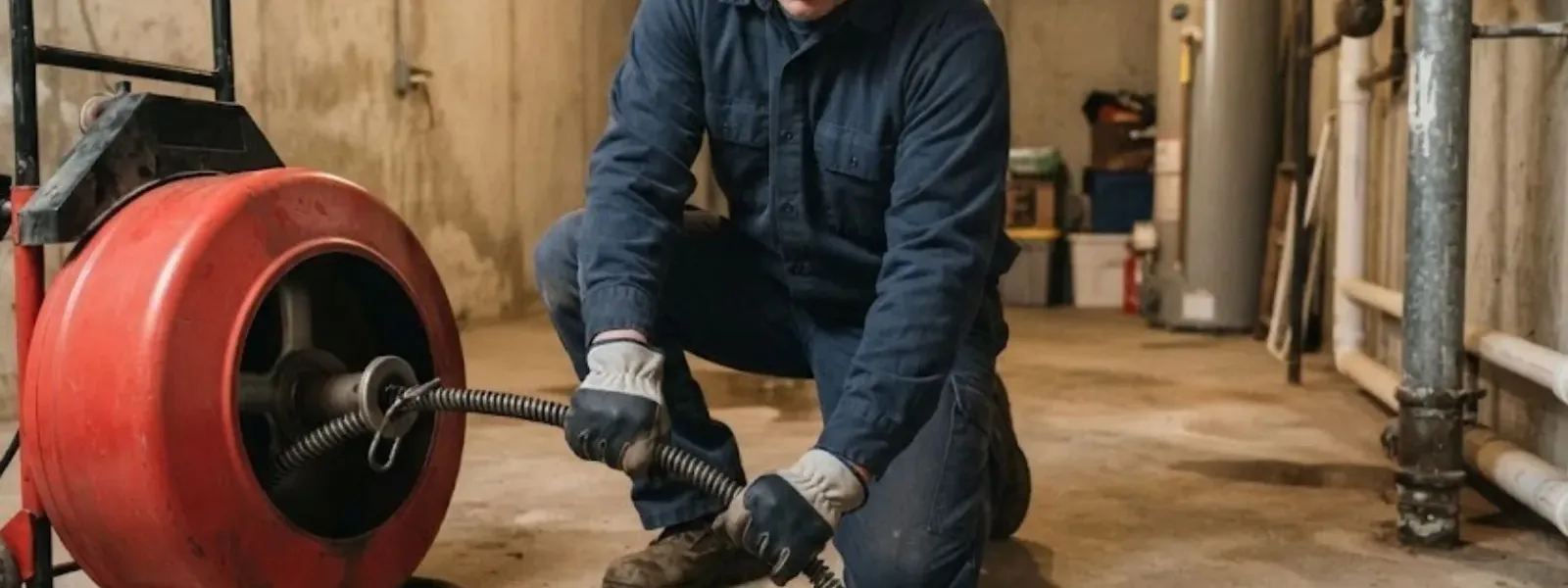
When a clog survives plunging, a hand snake and a hot flush, a plumber's hydro jetting service uses high-pressure water to scour the pipe wall, which removes grease build-up that a plain snake can punch through and leave behind.
Planning this repair?
Call to book a same-day appointment when one is available. You get a clear price before work starts.
What goes down Newark drains
If the clog sits in the house drain, in fixtures that share a line or past the cleanout, the blockage is not a baking soda problem. That is the territory for sewer line cleaning, and for the City if the main under the street is involved.
Signs you are past the home-remedy stage
A single slow sink is a local problem. Several symptoms at once suggest a deeper one.
- Water backs up in a floor drain or tub when you flush a toilet or run the washer.
- Two or more fixtures drain slowly or gurgle at the same time.
- The same drain clogs again within a week or two of clearing it.
- A sewage smell lingers in the basement even after you flush traps with water.
- You have already tried one round of plunging and one round of fizz with no change in standing water.
For a basement backup, ring the City's Water and Wastewater department first and ask for a check of the main, and then a plumber if the main is clear. We also take these calls in nearby communities such as Glasgow and Bear, where the sewer arrangement can differ from the City's, so confirm who maintains your main before you call anyone.
What the fizz cannot do for old pipes
Old drains build a coat inside the pipe. Grease sets, mineral scale grows and roots can enter at joints. Baking soda does not remove any of those, and repeated attempts can delay a diagnosis that a camera would settle quickly. If the same line clogs every few months, the cheapest long-term answer is usually a proper cleaning and a look inside, not another box of baking soda.
Frequently asked questions
EPA advises against it and points to a snake or very hot water first. The chemicals can harm some pipes and are risky for the next person who works on the drain. Separately, the City's sewer guide asks residents to keep grease out of drains.
No. A toilet clog is usually paper or an object in the trap, and the fizz has nothing to dissolve. Use a flange plunger or a closet auger. If those fail, a plumber can pull the toilet and clear the line.
It will not dissolve a hardened grease plug. Hot water and soap can soften a thin film, but a real plug needs a snake or jetting. The long-term fix is to stop pouring grease down the sink in the first place.
There is no official schedule. Once a month is a common habit for odor, but it is not a clog prevention method. A drain screen and regular scraping of plates do far more.
Stop adding anything to the drain and stop running water in the house. A bubbling floor drain points to a blockage lower in the line, and the fizz cannot reach that far. Ask the City's Water and Wastewater department to check the main, and call a plumber if the main is clear. Dispatch runs 24/7 if it happens after hours.
Need a plumber instead of an answer?
Call (410) 378-7601