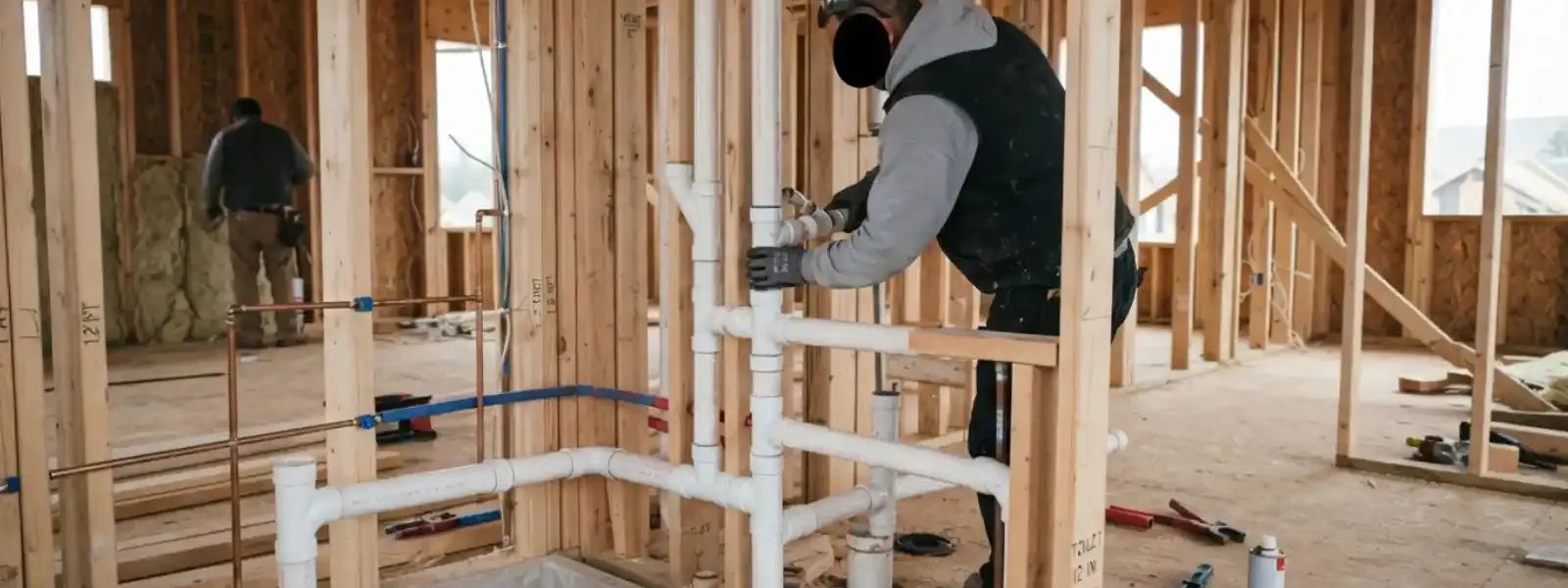
Gurgling drains and a sewer smell in a Newark, DE home usually mean air is not moving freely through the plumbing vent system, a trap has lost its water seal, or a drain line is partly blocked. Which one it is depends on where and when the sound or smell shows up.
If one fixture gurgles, suspect that fixture's vent or trap. If several fixtures gurgle at once, or sewage backs up in a low drain, suspect the main line, and stop using water until a plumber looks.
Why drains gurgle at all
Every drain pipe needs air behind the water. When water runs down a pipe, it pushes air ahead of it and pulls air in behind. The vent pipes, which rise through the walls and out the roof, supply that air.
Block the supply and the water has to pull air from somewhere else. It drags it through the nearest trap, and you hear a gulp. In the worst case it pulls the water out of the trap, which is the barrier that keeps sewer gas out of the house.
That is why a vent problem often shows up as two symptoms together: a gurgle and a smell.
Sort the symptom: a decision table
| What you notice | Likely cause | What to do |
|---|---|---|
| One sink gurgles after draining | Partly blocked vent or local clog | Try the fixture again, then call if it repeats |
| Toilet gulps when a tub drains | Shared vent or branch line problem | Note which fixtures interact and call |
| Smell near an unused floor drain | Dry trap | Pour water into the drain, then recheck |
| Smell around the base of a toilet | Failed wax seal | Do not use the toilet, call a plumber |
| Several fixtures slow, basement drain bubbles | Main line or lateral blockage | Stop water use and call the same day |
Note what ran just before the sound: which tap, which flush, which drain. That pattern helps a plumber more than a description of the noise.
The causes in more detail
Blocked roof vent
Leaves, a bird nest or ice can close the top of a vent pipe. The pipe still looks fine from inside the house.
Dry trap
A floor drain or a seldom-used sink can lose its water seal to evaporation, and sewer air then enters the room. Pouring water in restores it.
Venting that was never right
An older addition or a do-it-yourself fixture may have a vent that is too small, too long or missing.
Failed toilet seal
A wax ring that has dried out lets odor and sometimes water escape at the floor.
A cracked or sagging drain
A broken pipe lets sewer air out into a wall or crawl space, and a low spot holds water and waste.
Cold matters here. A vent pipe that is small in diameter can narrow with frost on a very cold night, and a clear day often brings it back. If the gurgle comes and goes with the weather, say so.
Sewer gas or natural gas: the safe response
Sewer gas and natural gas can both smell like rotten eggs. If you cannot tell them apart, assume it is natural gas. Walk out first. Once you are outside, contact the gas company and emergency services. A plumber comes after that, not before.
Gas piping work is not for homeowners in Delaware, and the state's homeowner exemption for plumbing excludes it. A plumber can look at a drain smell, but a gas smell belongs with the utility first.
Sewer gas also deserves respect at strong concentrations, so open windows and keep people out of a room with a heavy odor.
Planning this repair?
Call to book a same-day appointment when one is available. You get a clear price before work starts.
What the code says in Newark, DE
An air admittance valve is a one-way valve that lets air in but not out. It can replace a vent through the roof in some cases, which is why the state wants the inspector to approve it first. It is not a cure for a blocked vent, and a plumber should decide whether one is appropriate.
Permits and inspections for vent work
Newark's code exempts stopping a leak from the permit requirement. Pulling out a defective concealed trap or vent pipe and putting in new material is a different category. The code treats that as new work, and a permit and inspection follow.
The state's rough-in rule also applies. Plumbing covered before inspection may have to be uncovered, so do not close a wall over new vent pipe on your own schedule.
The City's permit form sorts jurisdictions by tax parcel. A number starting with 18 is a Newark permit through Code Enforcement staff, who review plans and conduct the inspections. Any other number is a New Castle County matter. A licensed plumber can tell you which one applies and pull the permit.
Who can fix it
A roof vent is not a casual repair. Roof work, wall cuts and pipe sizing all carry risk, and a mistake can pull the traps dry in every fixture.
A homeowner may do some plumbing in their own home, other than gas piping, if a permit application is filed. Delaware requires plumbing services to be performed under a licensed master plumber, and you can check one through the state's DELPROS lookup. New vent runs and fixture additions fall under plumbing installation work.
If a camera look at the main line is needed, sewer camera inspection shows a belly, a crack or a root intrusion. For a line that is only partly blocked, clearing the drain restores flow and often stops the gurgle.
If you rent
About half of Newark's housing units are renter occupied, according to Census data. If you rent, tell your landlord in writing which fixtures gurgle or smell. A trap can also go dry in a unit that sat empty, so run every drain after a vacancy.
Skip chemical drain openers. They do not fix a vent, and they can burn a plumber who works on the pipe later.
What to do before the plumber arrives
- Note which fixtures are involvedWrite down every drain that gurgles and every smell location.
- Run water in unused drainsPour a quart of water into floor drains and rarely used sinks to refill the traps.
- Hold off on heavy water useSkip laundry and the dishwasher while you wait, so you do not push water into a slow line.
- Look at the roof vents from the groundCheck for snow, ice or debris at the top. Do not climb on a roof to check.
- Call the same day if sewage is visibleAny backup into a tub, floor drain or toilet needs a plumber now.
Households across the area deal with the same causes, including those near Glasgow and Brookside, and the dispatcher can tell you whether a same-day visit is open.
Gurgling drain and sewer smell questions
The two share a vent or a drain branch, and the draining water is pulling air through the toilet trap. It can mean a blocked vent or a partial clog downstream. Note the pattern and call a plumber if it repeats.
Usually yes for new work. Newark counts replaced concealed vent pipe as new work, which brings a permit and an inspection, and state rules require rough-in work to be inspected before it is covered. A homeowner doing the work still files a permit application, and the parcel number tells you whether Newark or New Castle County issues it.
Both appear in official sources. The state adopted the 2021 International Plumbing Code with amendments, and Newark's municipal code adopts the 2018 edition. Ask Newark Code Enforcement which one governs your address.
At low levels it is mostly a nuisance, but a strong or lasting odor needs attention. Ventilate the room, keep people away, and call a plumber. If the smell could be natural gas, leave the house and call the gas utility and 911 first.
Yes. A cracked or sagging line can leak sewer air into a wall or crawl space, and a blocked line can back odor up a drain. A camera inspection is the way to know.
Need a plumber instead of an answer?
Call (410) 378-7601