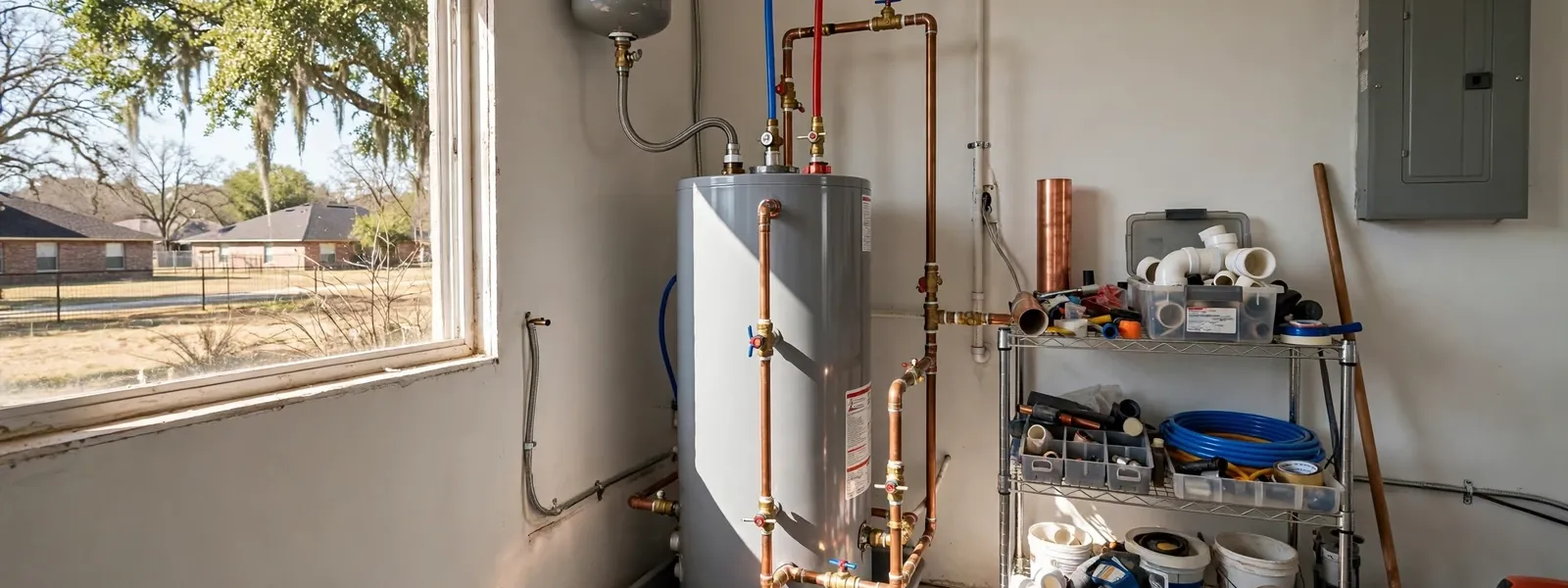
A like-for-like water heater swap in a Newark, DE house often takes part of a day once the plumber is on site. Moving to a different fuel, adding venting, going tankless or relocating the unit turns it into a full day or longer, and permit steps can add calendar days around the visit. Your real time depends on what the plumber finds when they open the closet.
The number that matters most is not the hours with a wrench in hand. It is the gap between losing hot water and getting it back. That includes shutting down the old heater, setting and connecting the new one, filling it, checking for leaks and letting the water come up to temperature.
This page walks through the job in order, shows what stretches it, and tells you what to do before the crew arrives.
The job, step by step
- Shut off and drainThe plumber closes the cold supply, shuts off the gas or the breaker, and drains the old tank to a floor drain or outside. A full 40 to 50 gallon tank takes a while to empty, and sediment can clog the drain valve.
- Disconnect and removeWater lines, the gas connection or electrical whip, the flue and the relief valve piping come off. Old tanks are heavy, so the move out of a basement or closet is often the slowest physical part.
- Set and connect the new unitThe new heater goes on a drain pan, and the first 12 inches of hot and cold connections go in as metal or an approved flex connector, as Delaware's plumbing rules require. An expansion tank is added where the rules call for one.
- Vent and fuel connectionsA gas unit gets a leak test on the gas connection and a check that the flue draws properly. An electric unit gets its wiring checked against the nameplate.
- Fill and purgeThe tank fills with the hot tap open so trapped air leaves the lines. Skipping it can leave spitting faucets for the first day.
- Test and explainThe plumber checks every joint, sets the temperature and walks you through the shutoffs.
None of those steps is long on its own. The drain, the carry-out and the fill are where the clock moves, and they depend on the tank size and your stairs.
What stretches the schedule
| Situation | Effect on time | Why |
|---|---|---|
| Same fuel, same spot | Shortest | Existing gas, water and vent lines reconnect to the new unit |
| New vent or flue liner | Adds hours | Old flue may be undersized, corroded or no longer matches the new unit |
| Gas to electric (or reverse) | Can add a visit | New circuit or new gas piping, and possibly a permit for each |
| Tankless conversion | Longer than a swap | Gas line sizing, new venting, wall mounting and service valves |
| Heater in an attic or tight closet | Adds hours | Slow carry-out and awkward connections |
| Failed shutoff valve | Adds time | The main or the heater's own valve has to be replaced first |
Older homes and rental houses add one more variable: surprises. A flue that looked fine at a glance, corroded copper at the connections or a seized shutoff can all turn a clean swap into a longer one. A plumber who asks for photos of the heater, its label and the vent before the visit can usually plan better, so send them if you are asked.
Hot water comes back later than the job ends
Even when the plumber finishes, a tank does not give you a hot shower right away. A new storage heater has to heat a full tank from cold, and that recovery time depends on the unit's size and power or burner input. Plan for a stretch of lukewarm water after the work is done, and ask the plumber for a rough estimate for your model.
Tankless units skip that wait. Once installed, they heat water as it flows.
Planning this repair?
Call to book a same-day appointment when one is available. You get a clear price before work starts.
Permits, inspections and the water shutoff
Parcels outside the city, including many in Brookside and Bear, are permitted through New Castle County instead. Those addresses follow the county's replacement water heater process, which includes a self-certification form.
Before the plumber arrives
- Clear a path from the front door to the heater, at least a few feet wide.
- Move storage, boxes and anything on or around the old heater.
- Find the main water shutoff and make sure it turns.
- Note the heater's age, size and fuel from the label, and take a photo.
- Plan to be without hot water for part of the day.
- Gas smell on the day: walk outside first, ring the gas utility and 911 from there, and treat the plumber as the third call.
The label photo saves time because it tells the plumber the model and the venting category before they touch anything.
Choosing between replacement and a repair visit
If your heater is leaking from the tank body, it is not a repair, and the water heater installation page explains the sizing, venting and code points that shape the job. If it is only a failed element or thermostat, the visit is usually shorter, and the water heater repair page covers the symptoms. Dispatch runs 24/7, and a same-day slot is offered whenever one is open.
Questions about timing in Newark, DE
The City lists water heaters among permit-related alterations and says inspectors carry out inspections for permits it issues. Whether a plain swap needs a City permit at your address is a question for Newark Code Enforcement, and county parcels answer to New Castle County. The state plumbing code applies either way.
That depends on the type of heater and the shape of the job. A storage tank swap often means hot water is off for part of a day, plus recovery time for the new tank. Ask the plumber to estimate recovery for your model.
Sometimes. A same-day slot is possible when one is open, and an emergency tank failure at night or on a weekend gets dispatched 24/7. A planned conversion that needs a permit or new venting takes longer to schedule.
Yes, a little. A bigger tank is heavier to move, slower to drain and slower to fill and reheat. The extra time is small compared with venting or fuel changes.
Tell the plumber before they start. If the valve will not close, the City's water department can close the street valve after you book the repair, or the plumber can replace the shutoff first.
Need a plumber instead of an answer?
Call (410) 378-7601