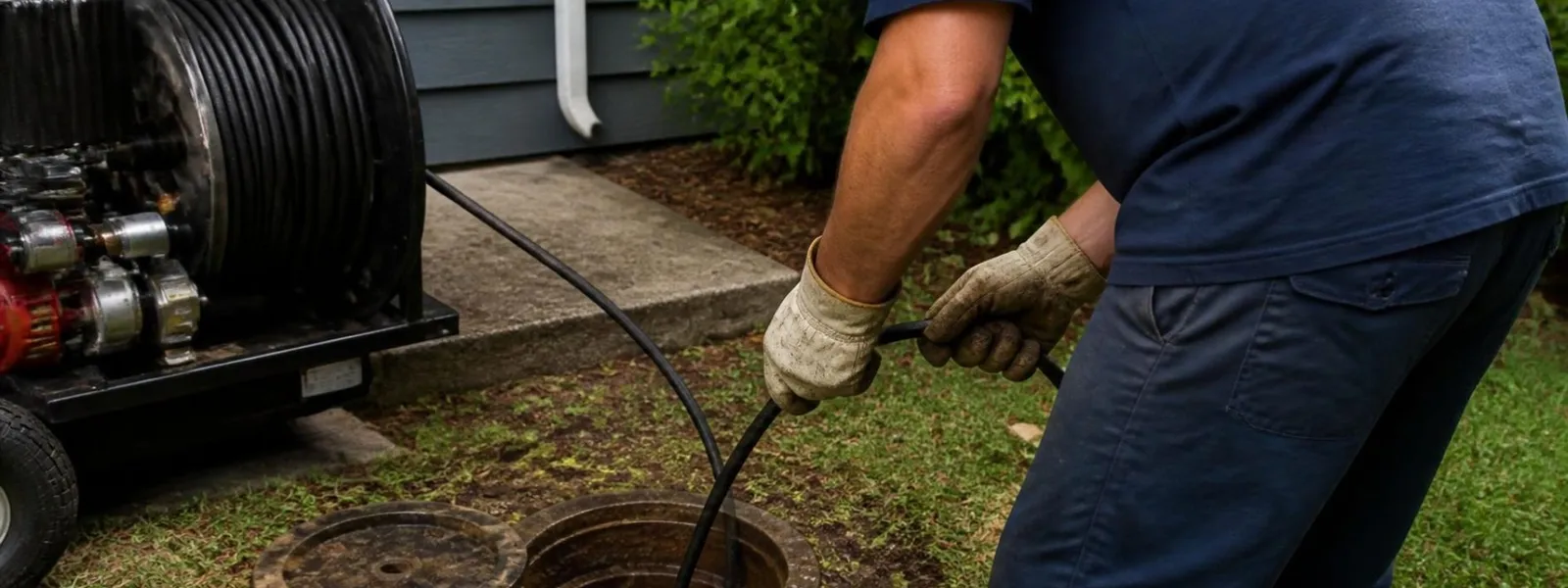
There is no set schedule for cleaning a sewer line, and anyone who gives you one number for every house is guessing. In Newark, DE the better answer is to clean the line when signs, conditions or a camera look say it needs it, and to have it checked sooner if your house has the risk factors below.
A line with no roots, no sags and sound material can go years without work. A line under a mature tree, or one that has backed up before, may need attention far more often.
What the sewer line is, and where your part ends
The sewer line, or lateral, is the pipe that carries wastewater from your house to the City's main under the street. The main belongs to the City. The lateral is split between you and the City by a rule in the Newark Code, which matters when you decide who calls whom.
For a pipe that has failed or a blockage that has already happened, see sewer line repair. This page is about deciding when to clean before trouble starts.
Signs the line needs attention now
- Drains in more than one room run slowly at the same time
- Gurgling in a toilet or tub when another fixture drains
- Water backing up into a basement floor drain or a shower
- A sewer odor outdoors near the cleanout, or in the lowest room
- Soggy or unusually green patches of lawn along the line
- A backup that cleared and then returned within a few months
One slow sink is a local clog. Several symptoms at once, or any backup into the house, point to the main line or the lateral. Stop using water and call the same day when sewage comes up.
What sets how often: the conditions that matter
| Condition | Why it matters | What it suggests |
|---|---|---|
| Mature trees near the line | Roots enter joints and cracks in search of moisture | Camera check and routine clearing if roots show |
| Older clay or cast iron | Joints open and iron scales inside | Camera check before choosing an interval |
| Prior backups | Something in the line is holding debris | Cleaning plus a look at the cause |
| Sag or belly in the pipe | Water and waste settle in the low spot | Repair, since cleaning only helps for a while |
| Heavy grease or wipe use | Buildup narrows the pipe | Change habits first, then clean |
Material and age change the picture. Clay pipe with many short joints is easy for roots to enter. Cast iron can scale and roughen inside. Plastic pipe has fewer joints and resists roots, but a poor slope can still hold waste. You cannot read any of this from the street, so a camera look decides.
Roots: the usual reason for repeat cleaning
Tree roots find the tiny amount of moisture and nutrients at a pipe joint. They enter as hair-like threads and grow into a mat that catches paper and grease. A cleaning cable or a water jet cuts the roots back, but they regrow, and how fast depends on the tree and the opening.
So a pipe with roots is not "cleaned" for good. It is on a cycle, and the cycle length comes from what the plumber sees on camera after a cleaning. If the roots return in a year, the visit schedule follows that. If the pipe stays clear for years, you stop paying for visits you do not need.
A cracked joint may need repair to end the cycle, and hydro jetting can clear scale and grease that a cable leaves behind.
Planning this repair?
Call to book a same-day appointment when one is available. You get a clear price before work starts.
Who clears what in Newark, DE
Not every address is inside the City. Homes in unincorporated areas around Newark, such as parts of Glasgow and Bear, sit under New Castle County rules, and some are on septic systems instead of sewer.
If you are on a septic tank, the clock is different. Septic tanks run on their own cycle, which the EPA puts at pumping every few years, sooner if a disposal is in use. That is a tank, not a sewer line, and your plumber or a septic contractor will tell you what your system needs.
How to decide: a short process
- Find your cleanoutLook for a capped pipe in the yard or against the foundation. A missing cleanout is itself a reason to talk to a plumber.
- Count your risk factorsLarge trees near the line, an older house and any past backup each raise the odds.
- Ask for a camera lookA camera shows roots, cracks, sags and scale. The footage tells you whether to clean, repair or leave it alone.
- Set the next date from what the camera showsClear pipe and few roots means a long gap. Fresh roots or heavy buildup means a shorter one.
- Keep the recordSave the video and notes. They help with the next visit and a home sale.
A sewer camera inspection turns a vague guess into a date. Treat the camera as the decision tool, not the cleaning.
What goes down the drain matters as much as the calendar
Newark's sewer guidance names fats, oils, grease, rags and diapers as blockage makers. The EPA says only toilet paper belongs in the toilet and lists wipes among the causes of sewer blockages. These habits affect how often you need a plumber more than any schedule.
Grease also decides who pays. A stoppage caused by what you pour down the kitchen drain is the owner's bill under city code.
Insurance and backups
A City crew will check the main under the street if your house backs up, and the City says it is available 24/7 through its Water Resources Department. If the main is clear, the lateral is your job. The City also says it usually cannot cover cleanup or damage costs from a backup.
Many policies do not cover water or sewage backing up into a home, and some offer it as an added rider. Ask your agent. The City also suggests considering a device that stops water from backing up into the house.
When to call
Call a licensed plumber after any backup, or when two or more fixtures run slow. You can verify the plumber through the state's DELPROS license lookup. For a line that needs clearing now, sewer line cleaning is the service that restores flow.
Sewer line cleaning questions
No single interval fits every house, so anyone quoting one number for all homes is estimating. The signs, the tree and pipe conditions, and a camera look decide.
It depends on where the roots are and whether a cleanout exists. The owner clears roots where no cleanout sits at or near the property line. Where a cleanout does sit there, the City takes the roots on its side of the line. If digging in the right-of-way is the only way to remove roots, the City handles that part.
Often not. Without roots, the common causes are grease, wipes and old pipe. Watch the signs, and have a camera check done if the house has backed up before.
A camera look at the line is more useful than cleaning for its own sake. It shows whether the pipe is sound, and it gives both sides a record.
No. Chemical products do not clear roots and can harm pipe and plumbers. Use a cable or water jet through a cleanout.
Need a plumber instead of an answer?
Call (410) 378-7601