The cost of installing a sump pump in Newark, DE depends far more on the job around the pump than on the pump itself. Whether a pit already exists, how far the water must travel to leave the house, where power comes from and whether a permit applies all move the price more than the brand on the box.
We do not print dollar figures here because the real number depends on your basement. What follows is the list of things a licensed plumber looks at, so you can compare quotes on equal terms.
What a sump pump install actually includes
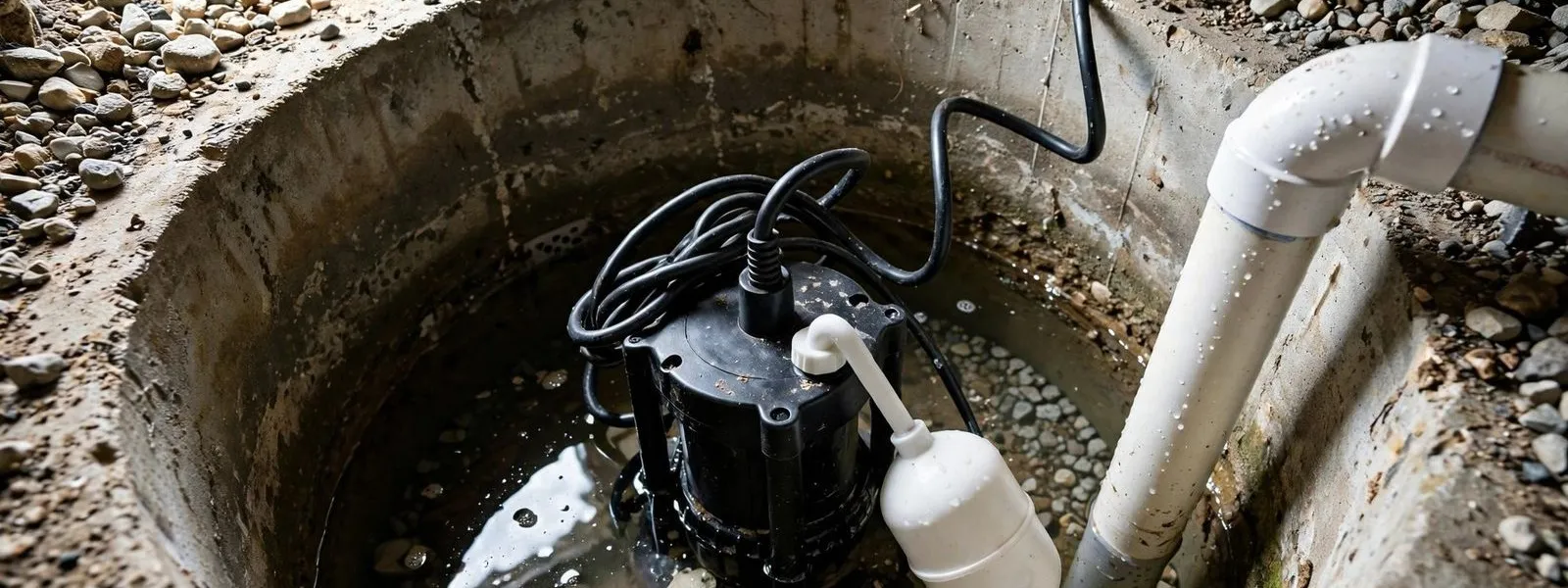
A sump pump sits in a pit, called a basin, cut below the basement floor. Water from drain tile or from under the slab collects in the pit, and a float switch turns the pump on when the level rises. The pump then sends the water out through a discharge pipe with a check valve that stops it from falling back.
So a complete install has five parts: the pit, the pump, the check valve, the discharge line and the power supply. Any one of them can be the expensive part. A quote that lists only "pump and labor" is leaving most of the job out.
The factors that move the price
| Factor | What changes | Question to ask the plumber |
|---|---|---|
| Existing pit or new pit | Cutting and removing concrete is the largest labor item | Is there a pit now, and what shape is it in? |
| Pump type | Submersible units sit in the water, pedestal units sit above it | Why this type for my basement? |
| Discharge route | Longer or buried lines take more pipe and digging | Where exactly will the water go outside? |
| Power | A grounded outlet and a protected circuit may be needed | Is the outlet in place and on a protected circuit? |
| Backup and alarm | A second pump or battery adds equipment and wiring | Do you recommend a backup, and why? |
| Permit and inspection | Fees and a wait for the inspection | Does my parcel need a permit? |
Read the table across a quote. If the plumber cannot answer the question in the last column, the price is still a guess.
Where the water goes decides a lot in Newark, DE
The discharge route is a common source of trouble. Newark's code does not allow a sump pump to drain into the sanitary sewer. Roof drains, paved areas, subsurface drains and French drains get the same treatment. The sewer chapter repeats the ban and names owners, tenants, contractors and plumbers as people who may not make that connection.
That means the discharge must go outdoors, away from the foundation, or into the storm system where that is allowed. The pipe cannot just be tied into the basement floor drain or the house sewer line.
Why Newark basements see a lot of water
The City's stormwater page says much of the flooding in Newark comes from capacity problems in the municipal storm system, where pipes and inlets are quickly overwhelmed in a high-intensity rain. That is the City's own description, and it applies to streets and lots, not just to creeks.
Creeks matter too. The National Weather Service review of the remnants of Hurricane Ida in September 2021 shows the White Clay Creek gauge near Newark reaching moderate flood stage, and roads near Brookside closed by flooding that evening. A pump sized for ordinary rain can be tested hard by an event like that, so ask whether the pump and pit are sized for a stormy day and not a quiet one.
Sizing and capacity matter more than most buyers expect. A pump that is too small runs without stopping. A pump that is too large cycles on and off, and short cycling wears out the switch.
Planning this repair?
Call to book a same-day appointment when one is available. You get a clear price before work starts.
Which jobs cost more and why
No pit exists
The crew must cut the slab, dig, set the basin and patch the floor. That is the largest single jump in effort.
A finished basement
Drywall, flooring or a utility room can limit access and add protection work around the floor.
A long discharge run
More pipe, more fittings and sometimes a buried line, which means digging and restoring the lawn.
No suitable power
A grounded outlet on a protected circuit may be needed, and the electrical part is not plumbing work.
A backup system
A second pump or a battery adds equipment and testing time. If you want one, ask about a backup as part of sump pump service.
If water keeps coming in even with a working pump, the answer may be drainage rather than pumping. A plumber can sort that out, and some homes need the exterior work described under basement waterproofing as well.
Insurance and flood cover: read your policy first
A homeowners policy is built for sudden, accidental loss, not for water that rises from the ground. The City of Newark says most homeowners' policies specifically exclude flood waters and rising water from inadequate drainage. The state insurance department makes the same point and adds that a flood policy starts only after a waiting period, so you cannot buy one while the rain is falling.
The City also notes that National Flood Insurance Program coverage is available to any Newark owner or renter of insurable property. A FEMA fact sheet lists sump pumps among the basement items that program covers, along with furnaces and water heaters, but not finished walls or flooring. Many policies also exclude sewer or drain backup unless you add a rider, so read your own policy and ask your agent.
A sump pump failure that floods the basement is a real loss, so the pump's cost is small against the cost of what it protects.
Permits and who inspects
Delaware's plumbing regulation requires a permit for relocating a fixture and its pipe, and for connecting new equipment to the water supply. A sump basin does not fit neatly into either description, so do not assume. Ask the right office.
The City's own permit form sorts this by tax parcel. Numbers starting with 18 go to Newark Code Enforcement, and the rest go through the county's Land Use department. A licensed plumber can tell you which applies and pull the permit. You can check any plumber's license through the state's online lookup at the Division of Professional Regulation.
Getting quotes you can compare
- Ask each plumber to write down the discharge route and where it ends outdoors.
- Ask whether the quote includes the pit, the check valve and the power connection.
- Ask what happens to the old pump and the debris from any concrete cutting.
- Ask whether a permit is included, and who pulls it.
- Ask what the plumber would do differently if the power fails during a storm.
A plumber working in Brookside or Glasgow works outside the City, where New Castle County rules usually apply instead. The right office depends on the parcel.
Sump pump cost questions
Not to the sanitary sewer. Two sections of the Newark Code, 7-10 and 25-7, rule it out for sump pumps and subsoil drains, and the rule names plumbers as well as owners. The line needs to run outdoors or into the storm system where the code allows, so ask your plumber to show the route in writing.
Usually the job around the pump differs. One bid may include cutting a new pit, a longer discharge line and a protected outlet, while the other assumes all three already exist. Compare the lines in the table above, not the totals.
Probably not. Flood is excluded from standard policies, and sewer backup often needs a separate rider. A separate flood policy has a waiting period before it starts, so look into it well before storm season.
State law lets owners work on their own home if they file for a permit first, and gas piping is excluded. The discharge route and the power connection are where do-it-yourself jobs most often go wrong. A licensed plumber handles the first, and plumbing installation covers the wider scope of new work.
In a basement that has flooded before, yes, because the pump usually stops when the power does. Ask for the backup to be priced as its own line so you can decide.
Need a plumber instead of an answer?
Call (410) 378-7601